🚚 Free Worldwide Shipping on All Orders!Shop Now
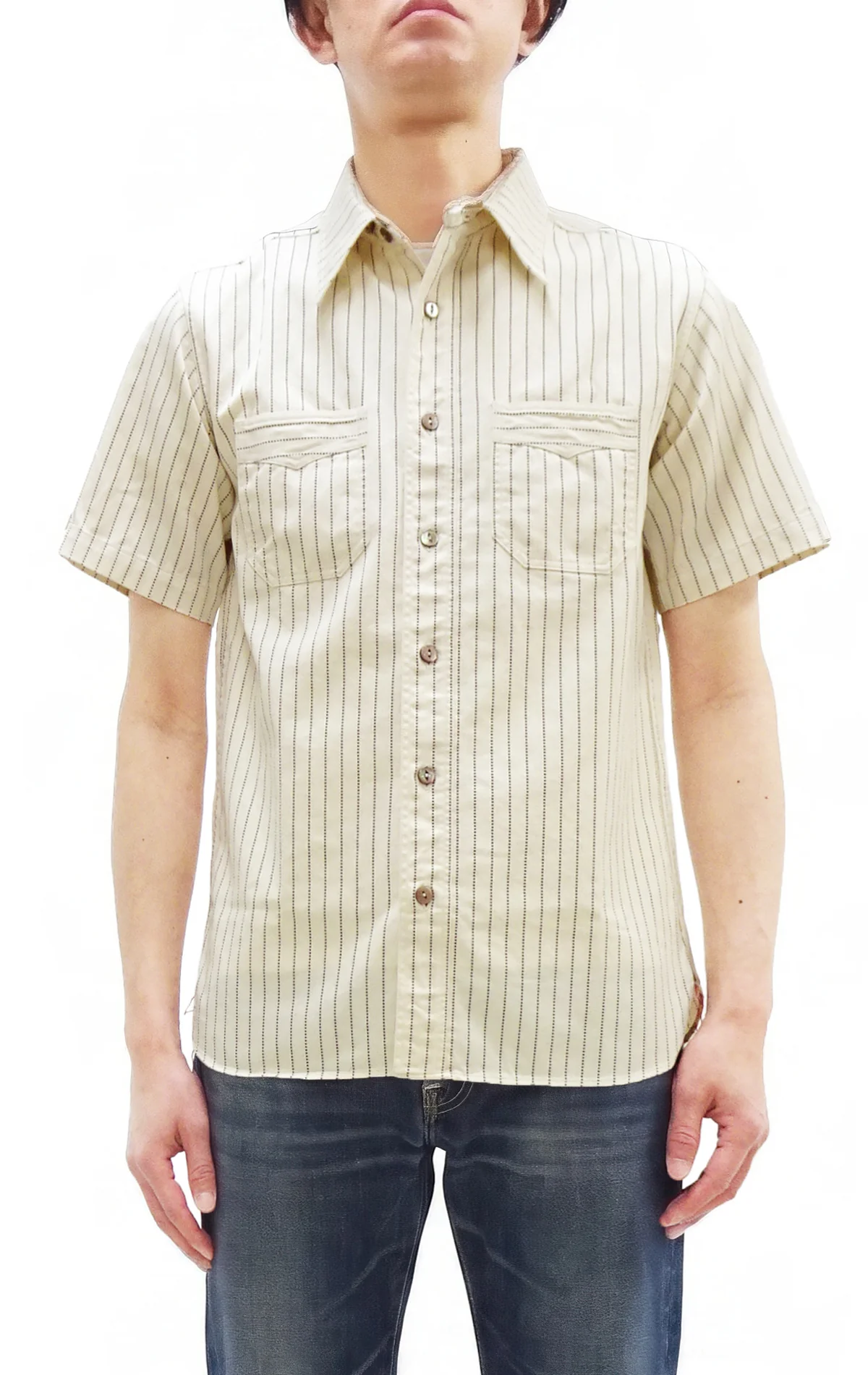
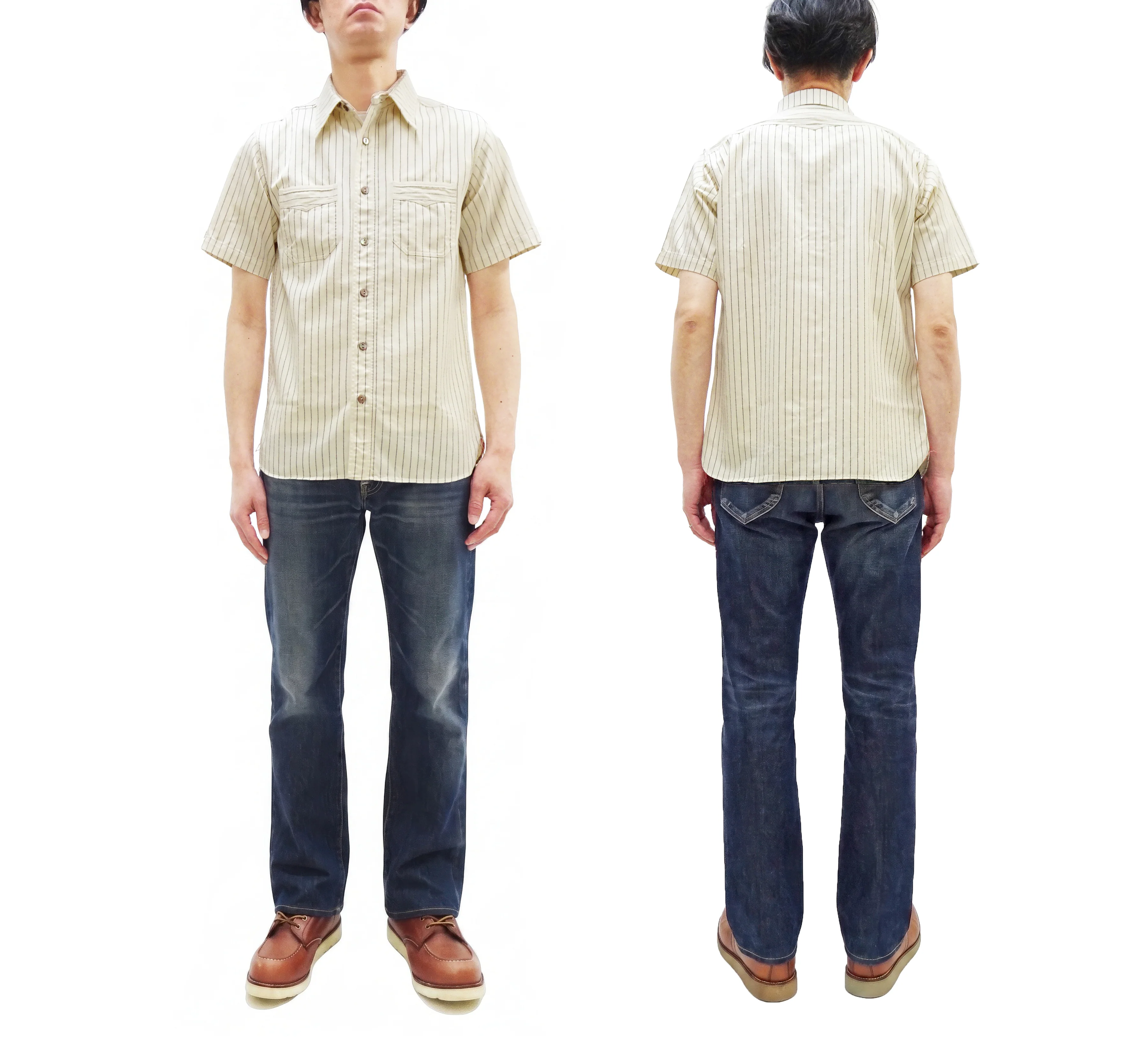
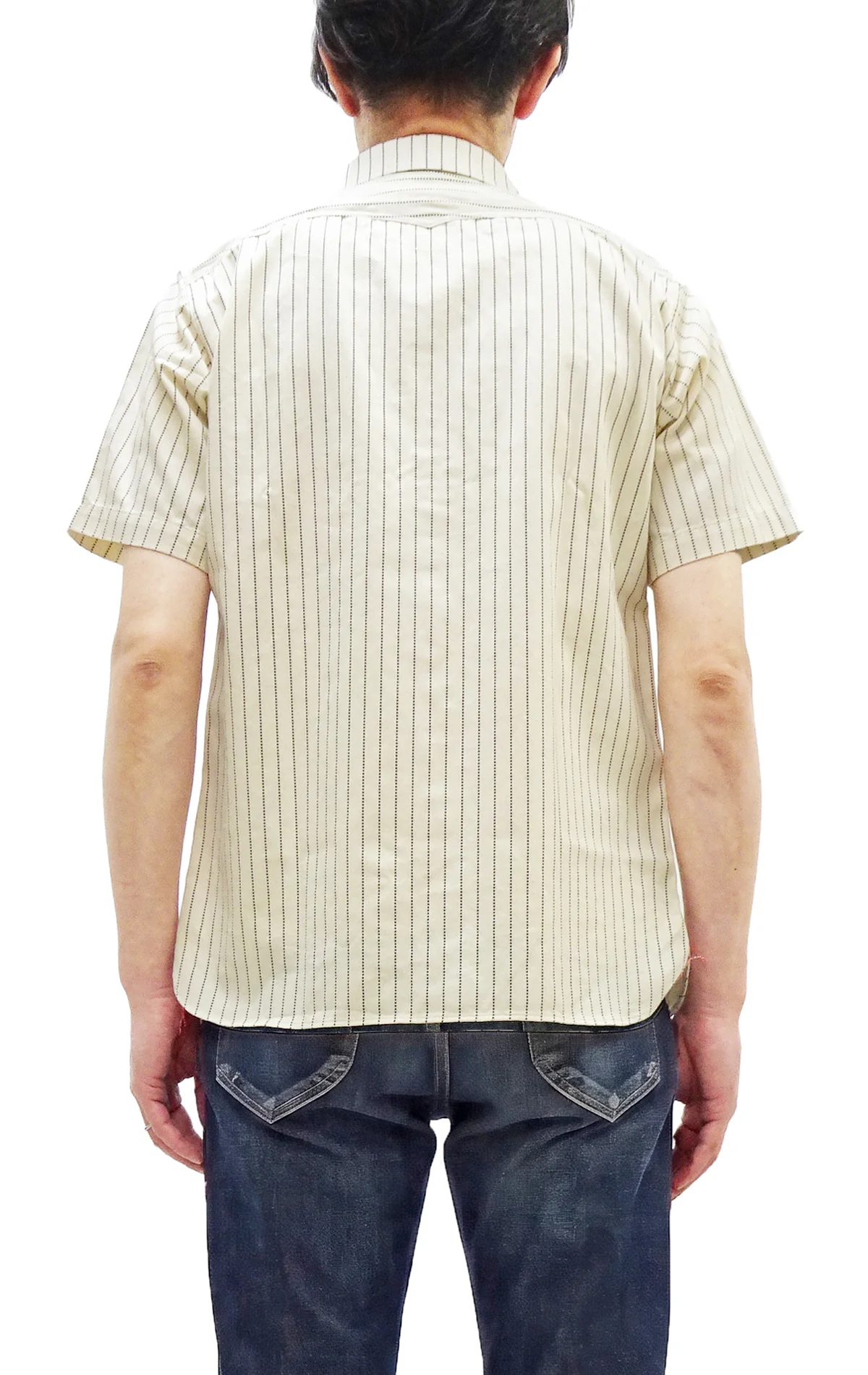
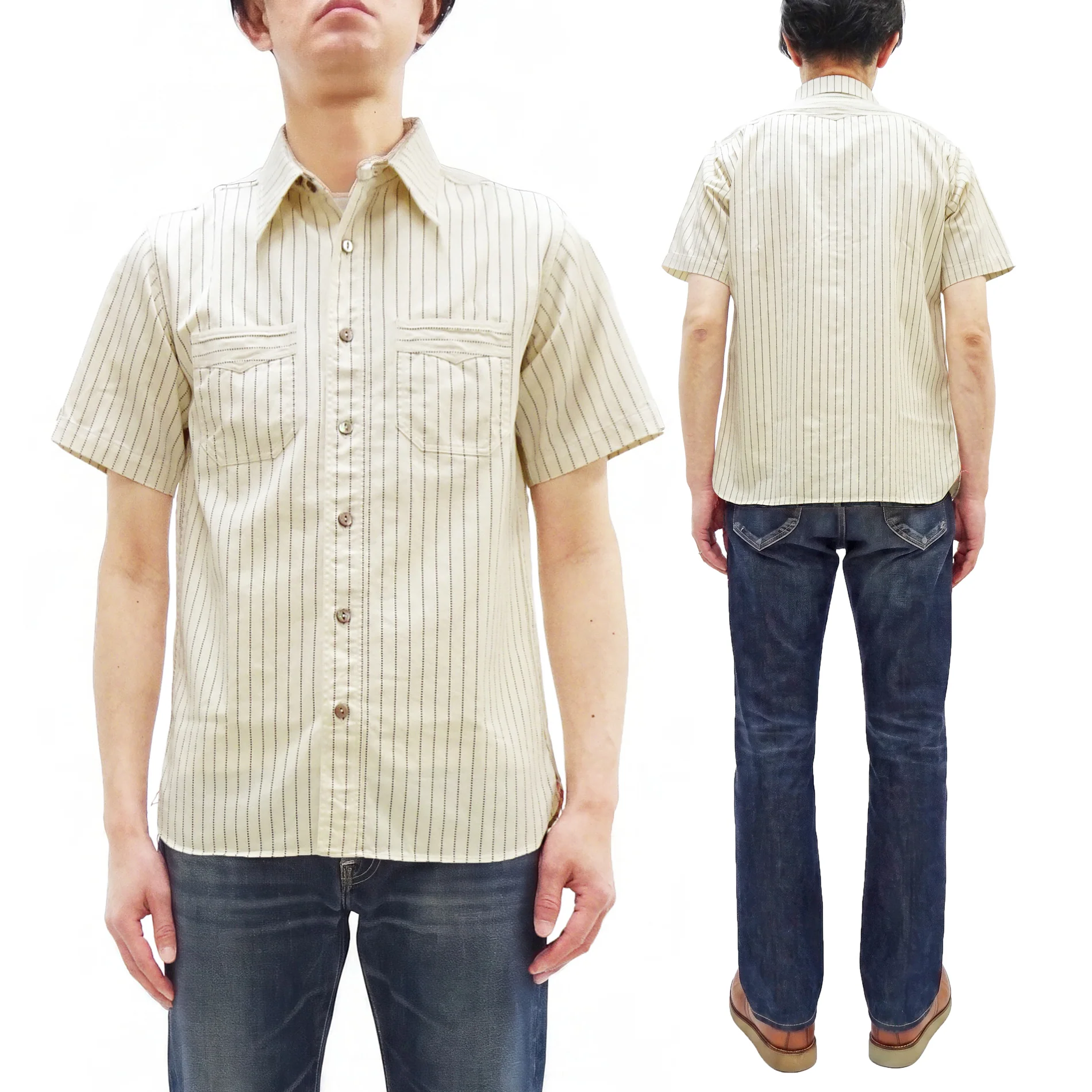
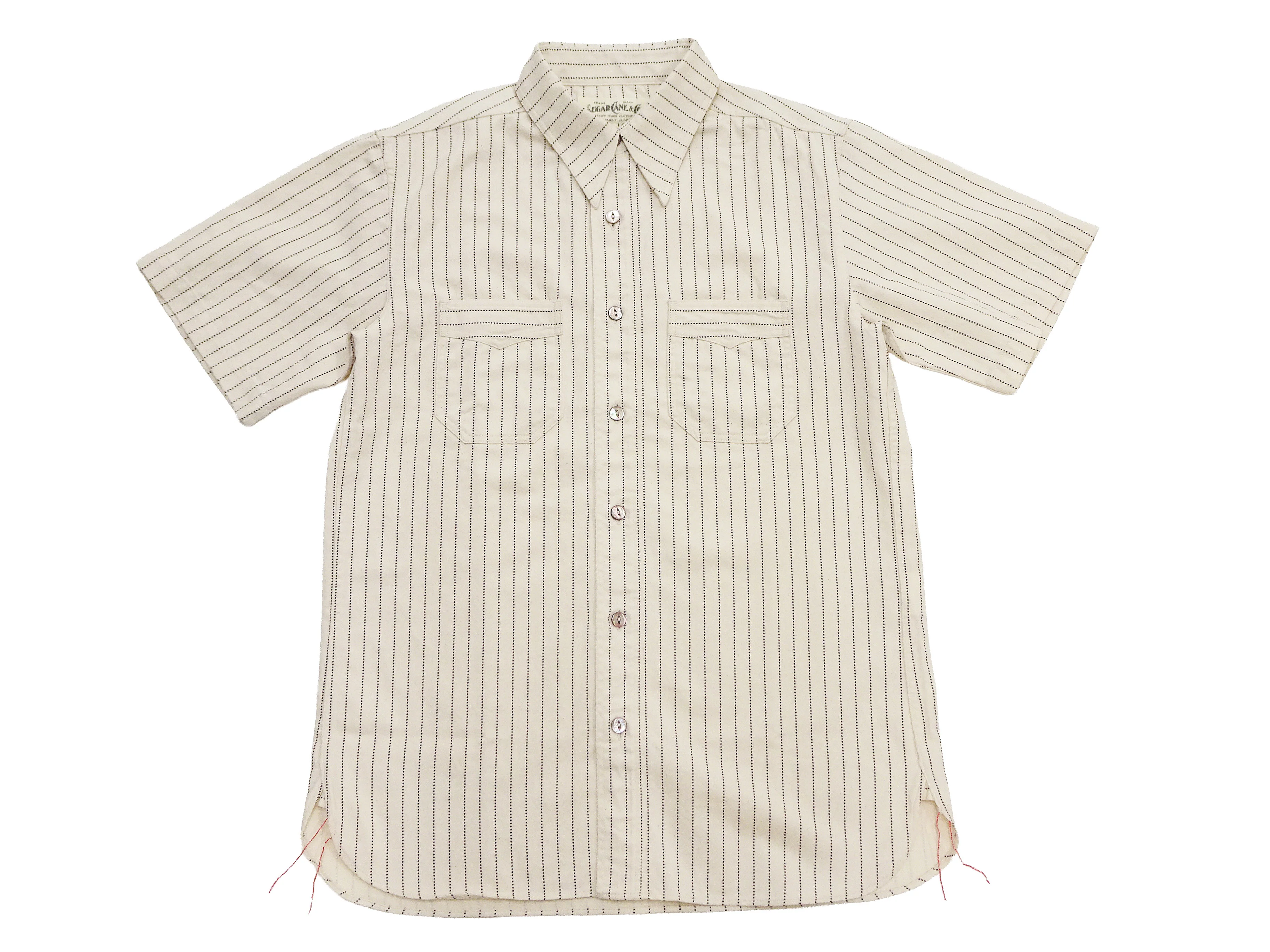
Sugar Cane Men's Short Sleeve Ecru Wabash Stripe Work Shirt 8.5 oz Cotton Twill Made in Japan (Fiction Romance SC37275 401A One-Wash)
Sugar Cane Men's Short Sleeve Ecru Wabash Stripe Work Shirt 8.5 oz Cotton Twill Made in Japan (Fiction Romance SC37275 401A One-Wash)
Sugar Cane
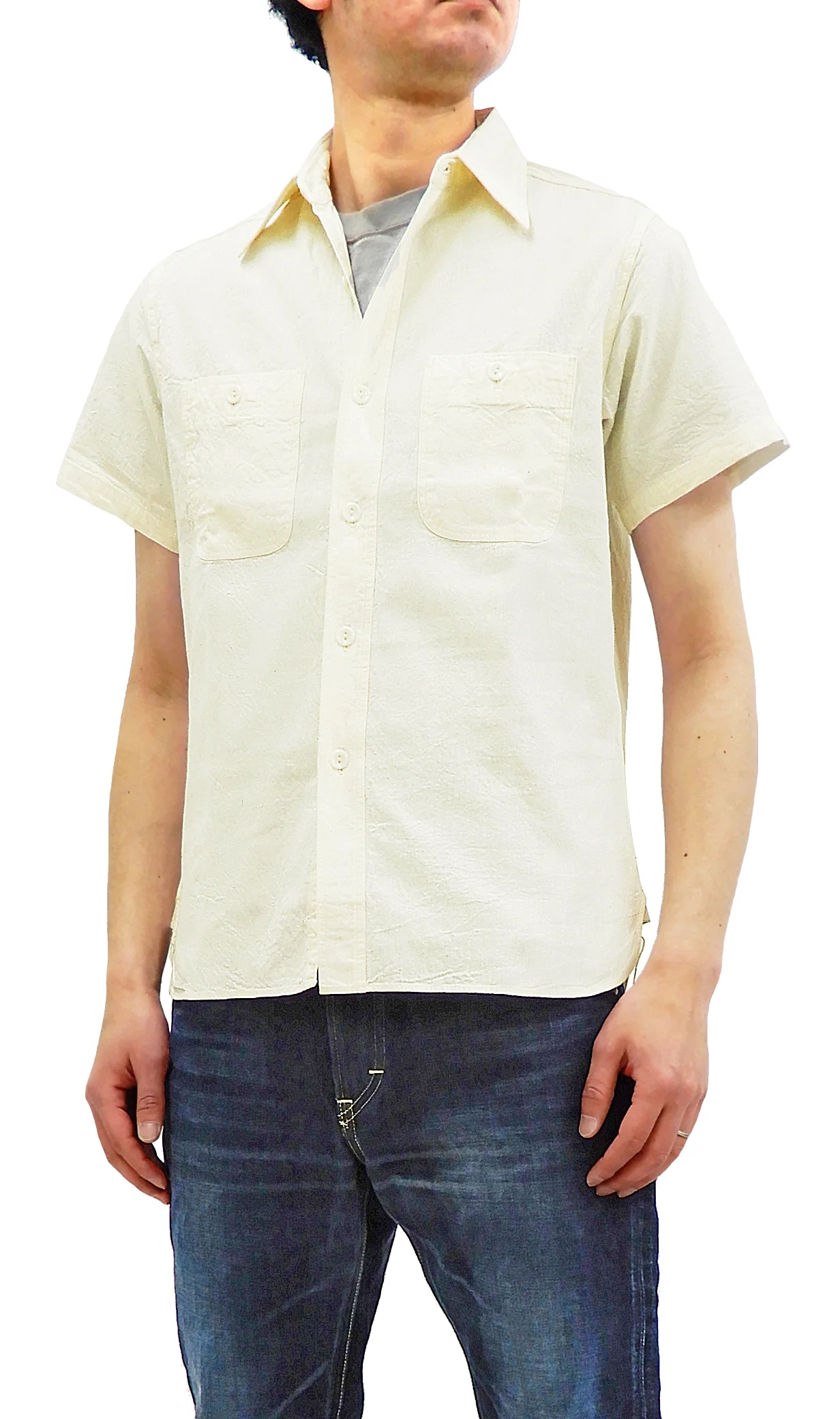
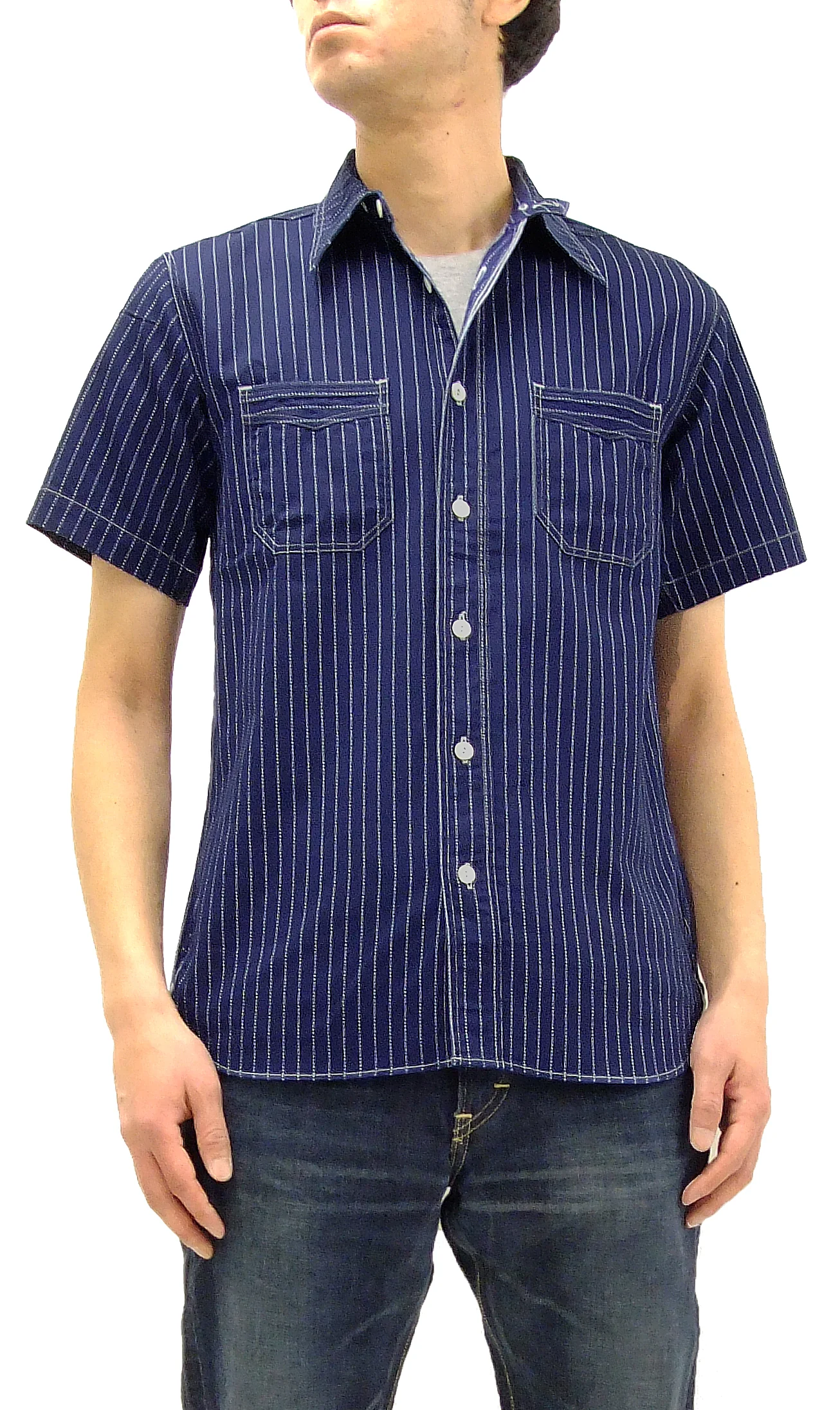
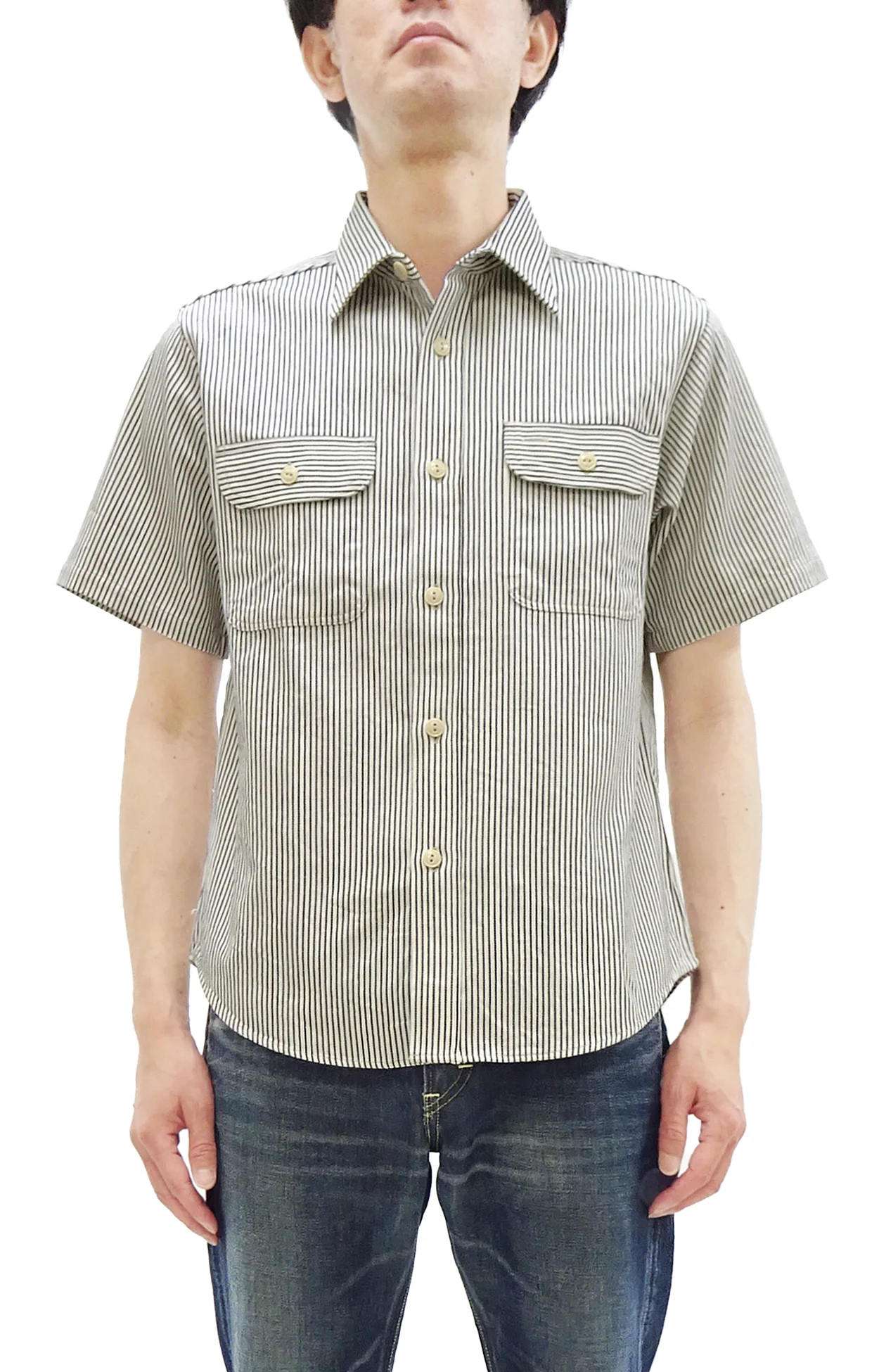
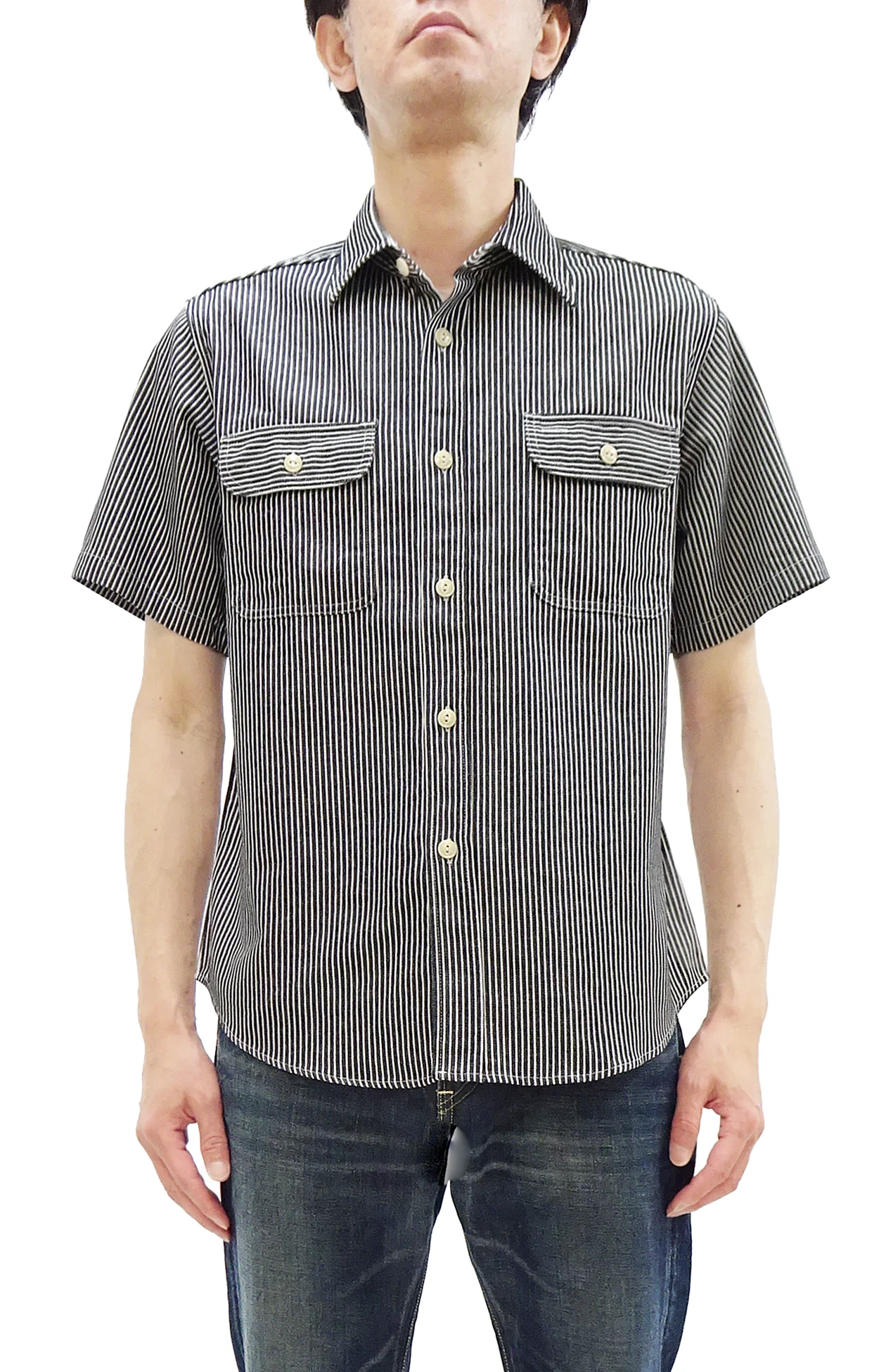
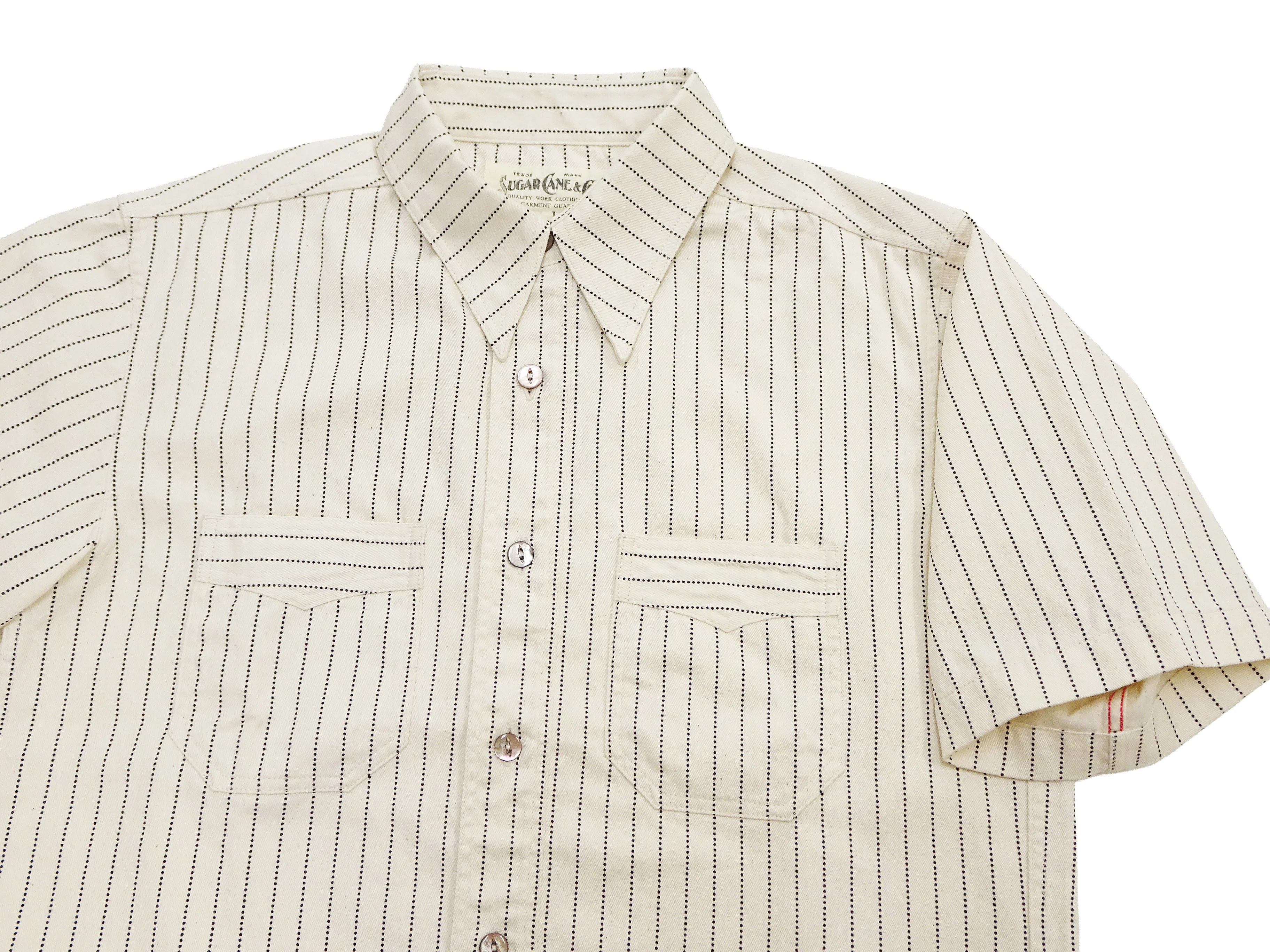
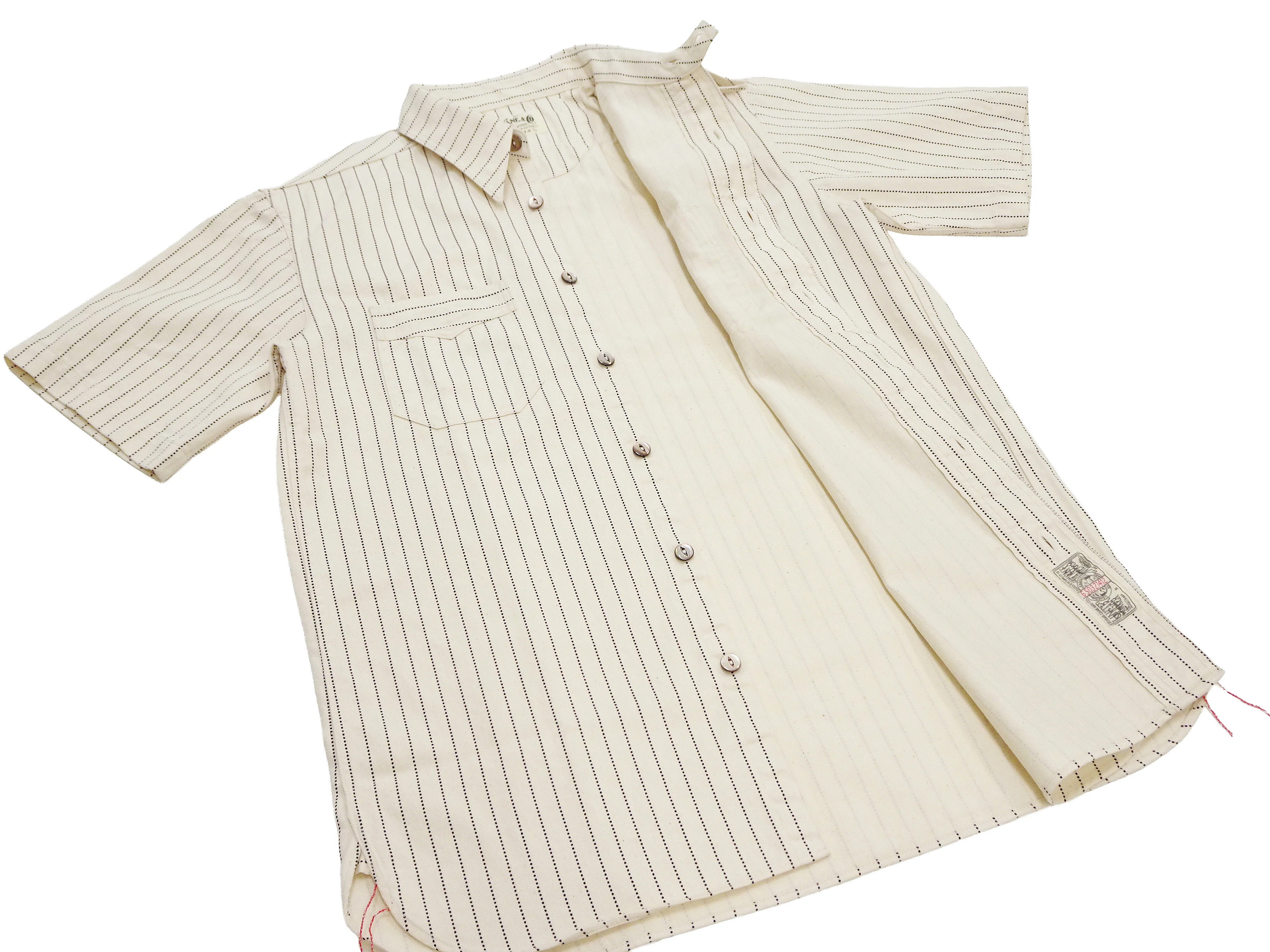
Lot No. SC37275 / FICTION ROMANCE 8.5oz. WHITE WABASH STRIPE WORK SHIRT (SHORT SLEEVE) / This men's short-sleeve button-up work shirt is made in Japan by Sugar Cane, Toyo Enterprises' classic American workwear label known for its vintage-inspired craftsmanship. This model is part of Sugar Cane's FICTION ROMANCE series and is based on classic work shirt styling, while featuring a distinctive ecru wabash stripe fabric with a lighter and less common appearance than standard indigo wabash. Traditional wabash stripe fabric often refers to indigo-dyed cloth decorated with rows of small discharge-printed pin dots, creating a striped pattern with a strong vintage workwear character. For this shirt, that traditional wabash character has been reinterpreted through an 8.5 oz. 100% cotton twill fabric in an ecru base color, printed with dot-stripe patterns using indigo dye. The result is a fabric that retains the recognizable character of classic wabash workwear while giving the shirt a more approachable feel. With Sugar Cane's signature detailing throughout, this shirt balances an authentic workwear look with everyday wearability in a style that fits naturally into a contemporary casual wardrobe.
Size and Fit Guide:
Gender: Men.
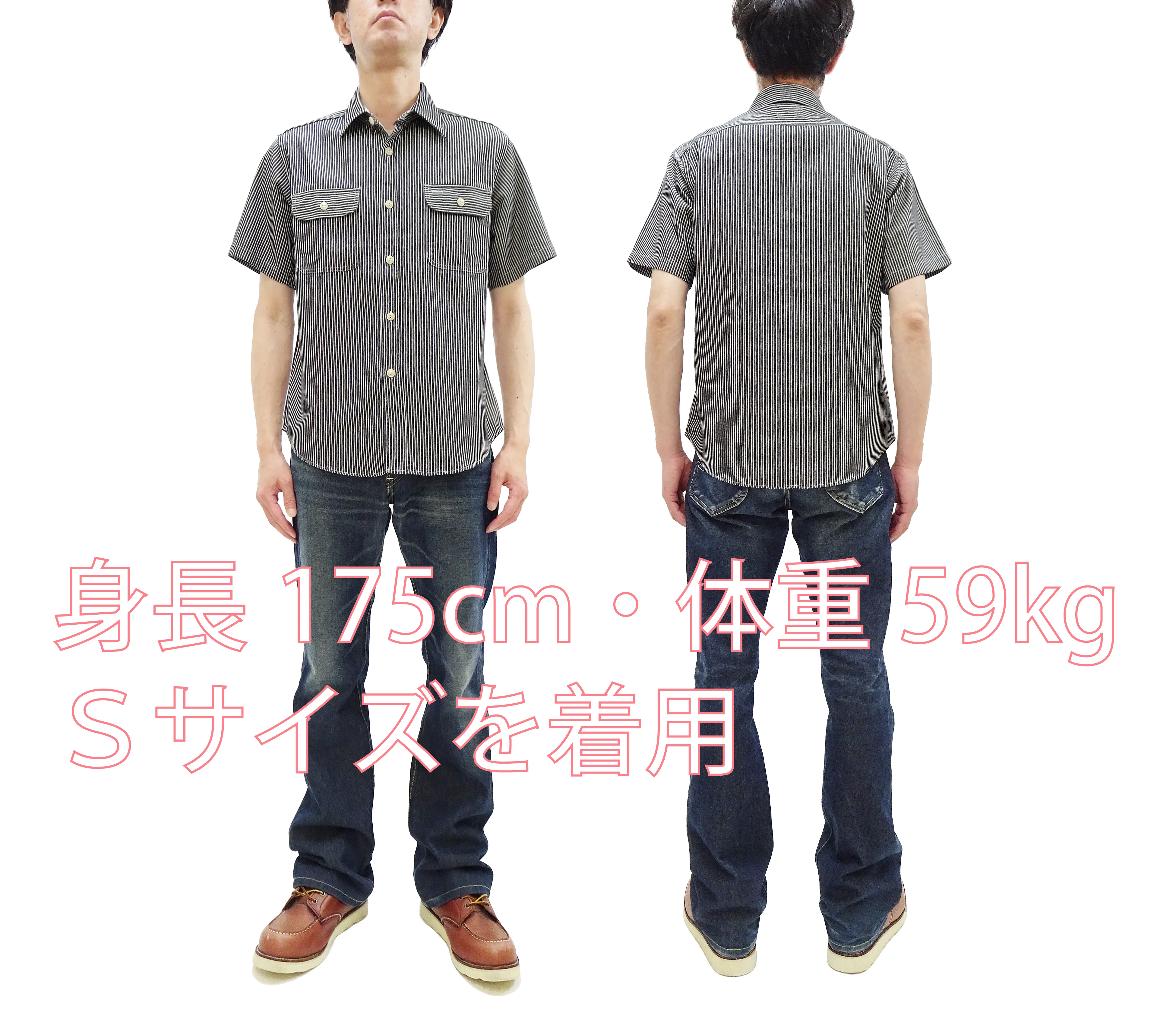
This item is generally sized closer to standard U.S./EU sizing and is designed with a modern regular fit that is neither too slim nor too loose. Compared with the more relaxed fit often associated with vintage work shirts, this shirt offers a cleaner and more balanced silhouette. The garment has been given a one-wash treatment to help minimize shrinkage and give the fabric a more settled feel from the start. Because fit can vary depending on body type, preferred silhouette, fabric weight, and the design of the garment, please refer to the actual garment measurements listed below and compare them with a similar shirt you already own. All measurements are taken with the garment laid flat and are provided in both centimeters and inches. Please note that slight variations may occur due to manual measurement and natural individual differences between garments.
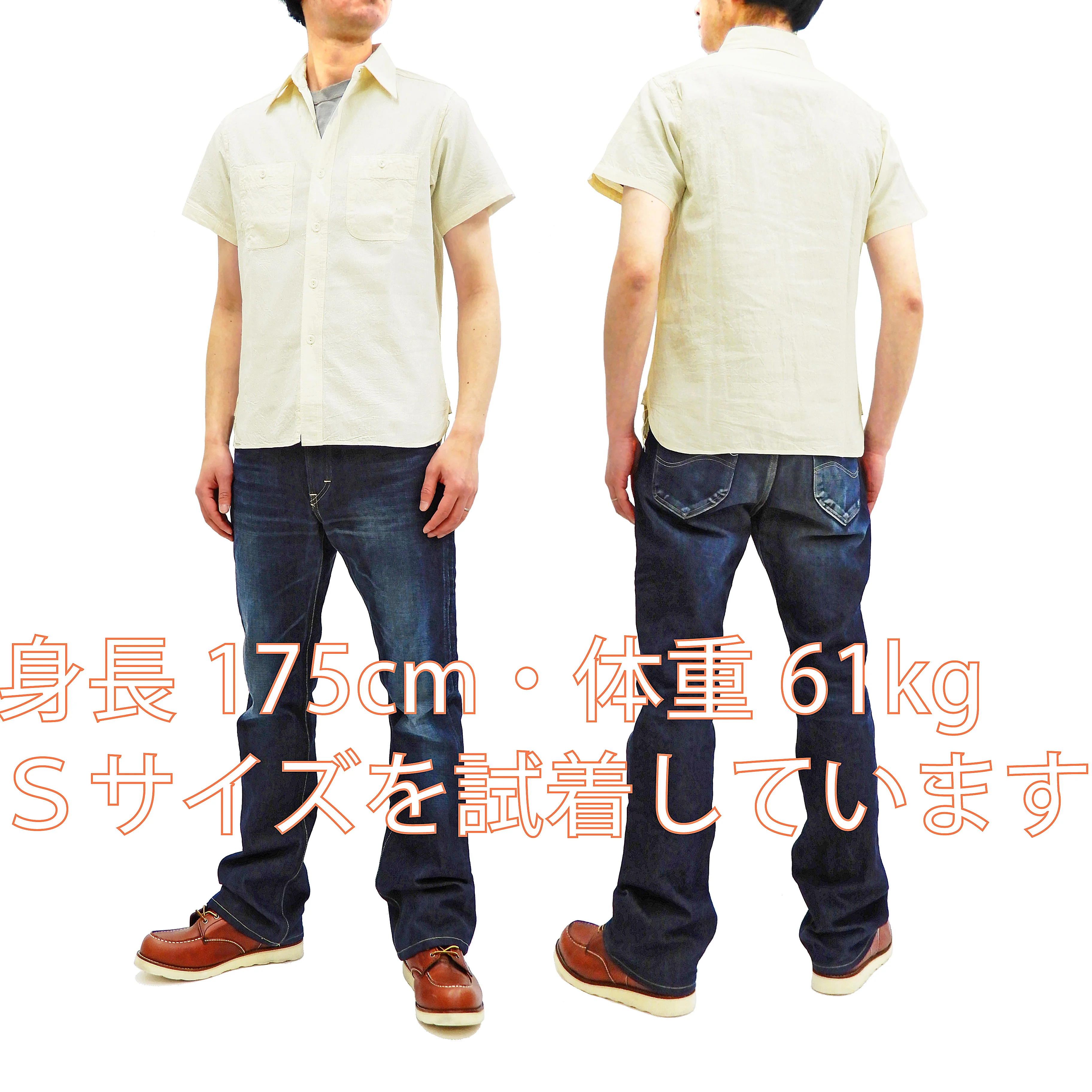
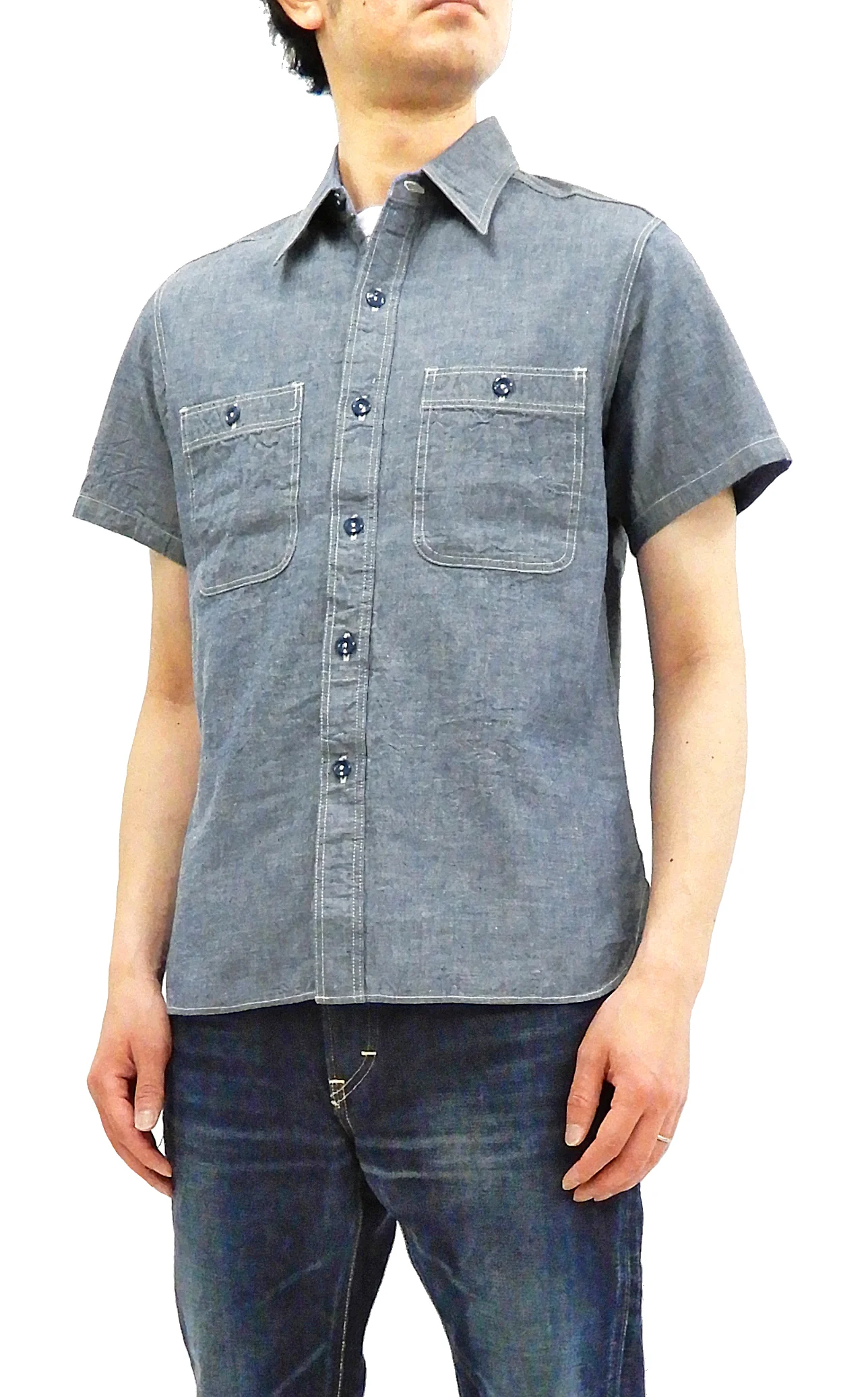
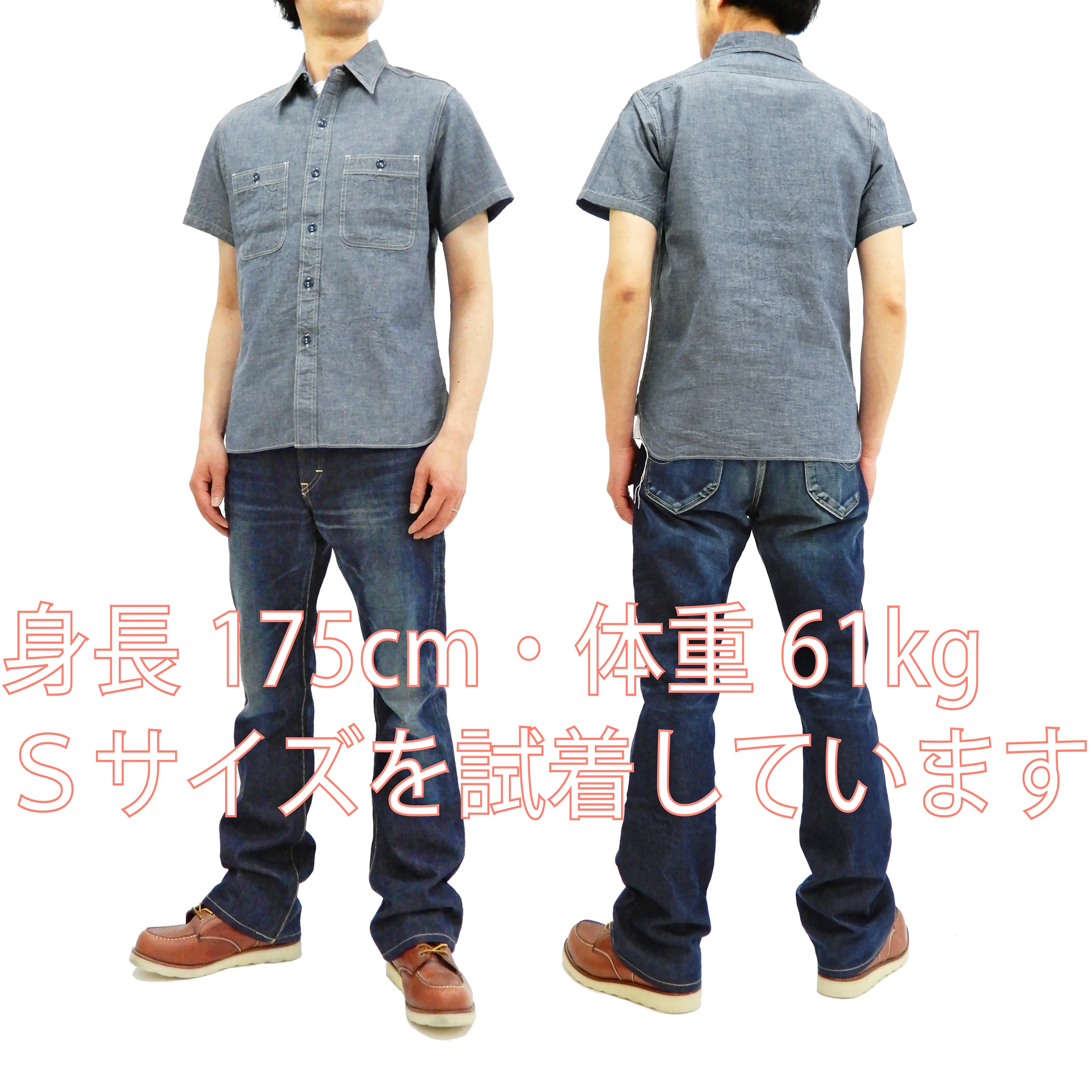
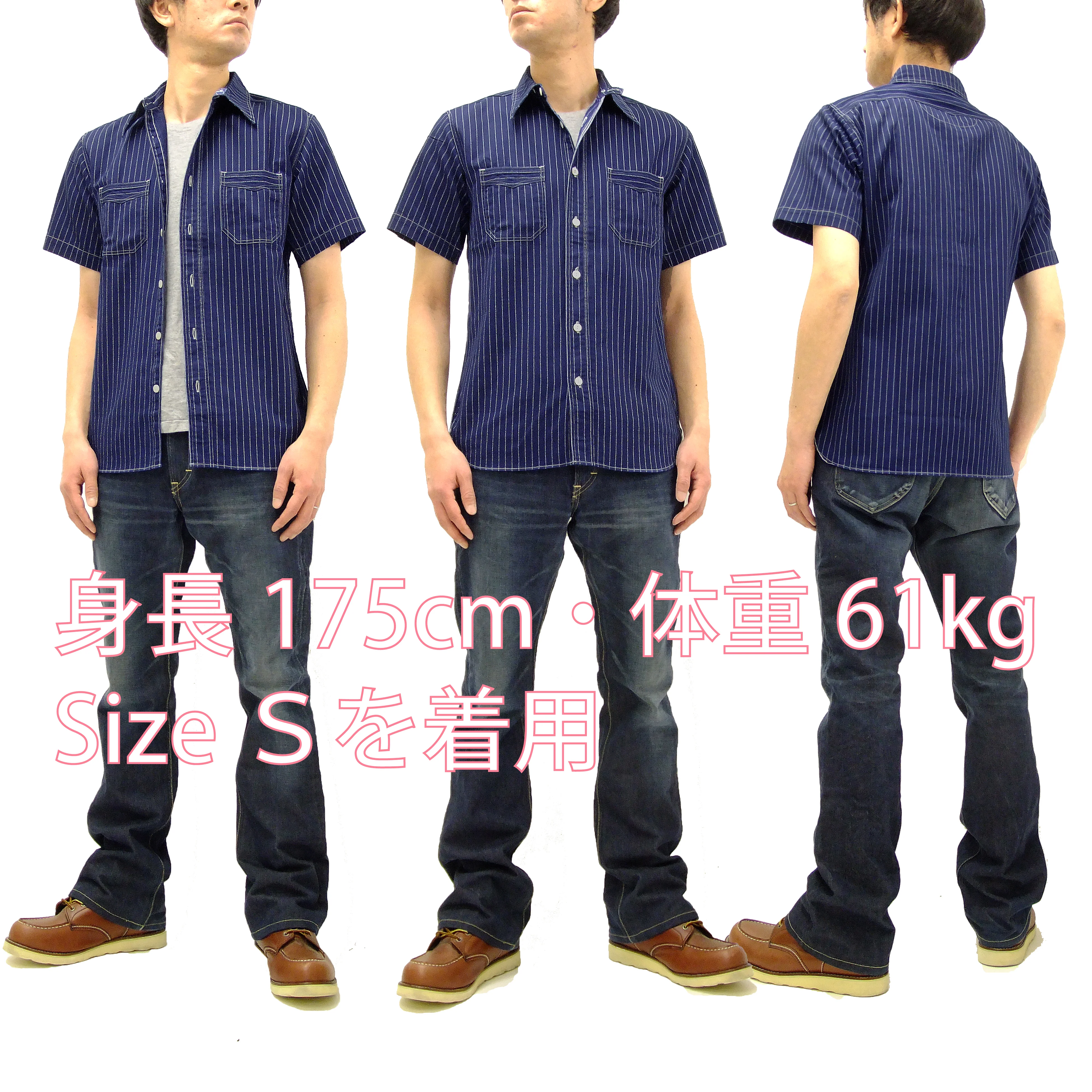
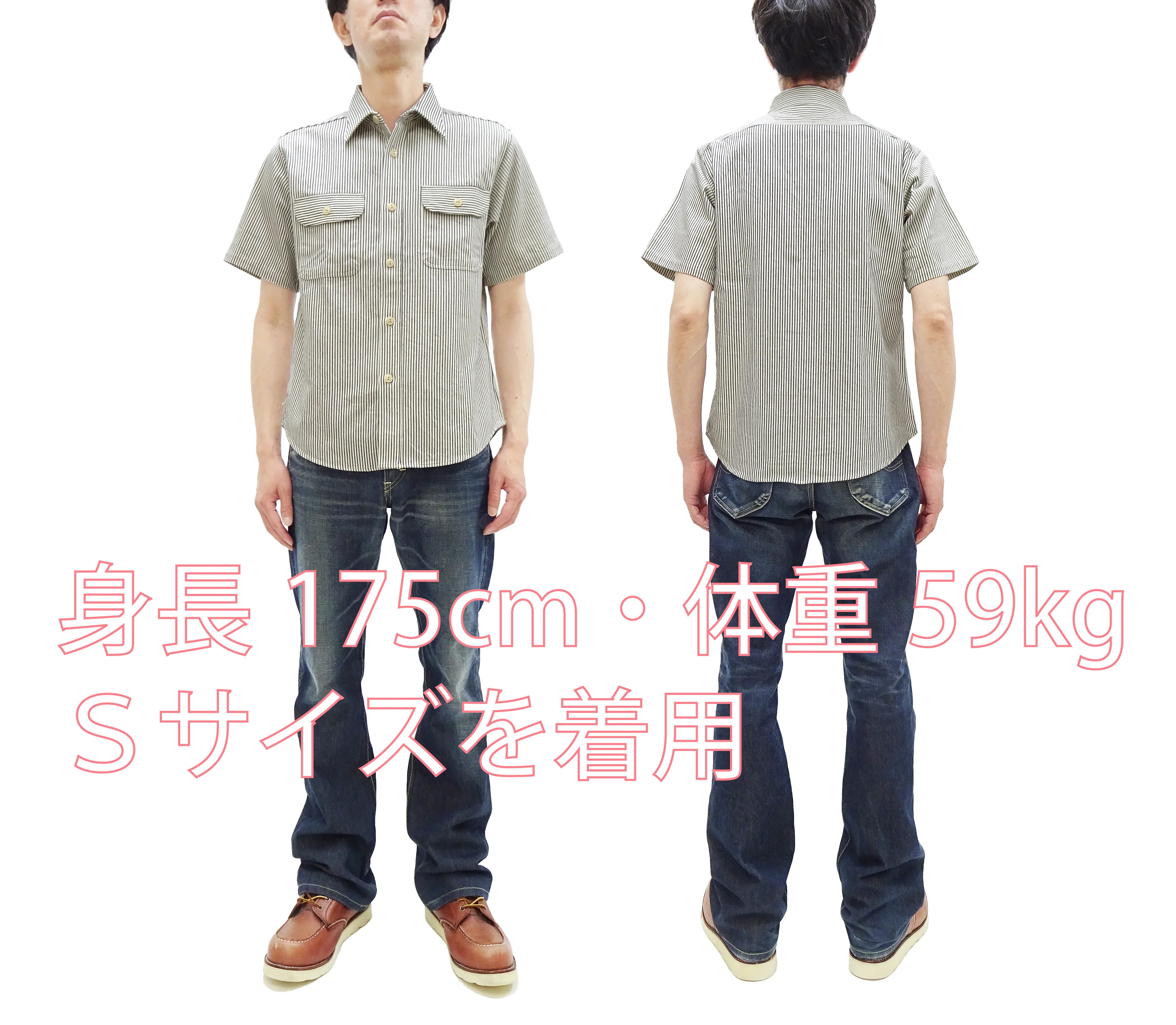
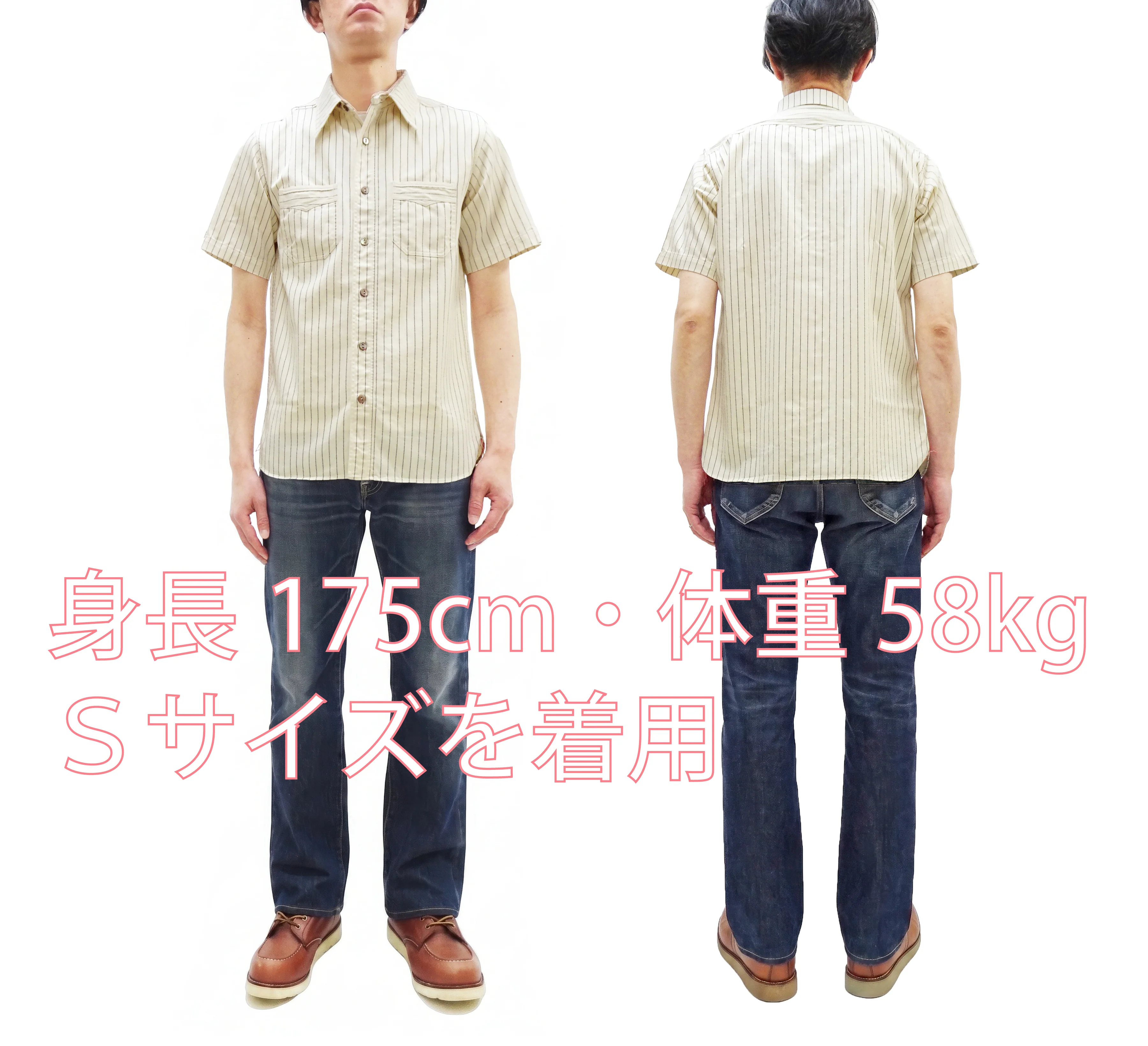
Our model is wearing a tagged size 36. He is 5'9" (175 cm) tall, weighs 127 lbs (58 kg), and has a chest size of 36 inches (91 cm). He normally wears a US/EU S or 36.
Available Sizes / Approximate Fit Reference:
Tagged Size S (14-14 1/2): As a general guide, fits approximately like a US/EU S, or approximately a US/EU 36 in tops.
Tagged Size M (15-15 1/2): As a general guide, fits approximately like a US/EU M, or approximately a US/EU 38 in tops.
Tagged Size L (16-16 1/2): As a general guide, fits approximately like a US/EU L, or approximately a US/EU 40 in tops.
Tagged Size XL (17-17 1/2): As a general guide, fits approximately like a US/EU XL, or approximately a US/EU 42 in tops.
Tagged Size XXL (18-18 1/2): As a general guide, fits approximately like a US/EU XXL, or approximately a US/EU 44 in tops.
The following measurements show the garment itself, not your own body.
Please compare them with a similar shirt from your wardrobe to get a better sense of fit.
In inches
Tagged Size S (14-14 1/2)__Width: 19.7"__Length: 28.0"__Sleeve: 17.3"(9.1")__Shoulder: 16.5"
Tagged Size M (15-15 1/2)__Width: 20.9"__Length: 28.7"__Sleeve: 17.7"(9.1")__Shoulder: 16.9"
Tagged Size L (16-16 1/2)__Width: 22.0"__Length: 29.9"__Sleeve: 18.1"(9.4")__Shoulder: 17.7"
Tagged Size XL (17-17 1/2)__Width: 23.2"__Length: 30.7"__Sleeve: 18.9"(9.8")__Shoulder: 18.5"
Tagged Size XXL (18-18 1/2)__Width: 24.4"__Length: 31.5"__Sleeve: 20.5"(10.6")__Shoulder: 19.7"
In centimeters
Tagged Size S (14-14 1/2)__Width: 50cm__Length: 71cm__Sleeve: 44cm(23cm)__Shoulder: 42cm
Tagged Size M (15-15 1/2)__Width: 53cm__Length: 73cm__Sleeve: 45cm(23cm)__Shoulder: 43cm
Tagged Size L (16-16 1/2)__Width: 56cm__Length: 76cm__Sleeve: 46cm(24cm)__Shoulder: 45cm
Tagged Size XL (17-17 1/2)__Width: 59cm__Length: 78cm__Sleeve: 48cm(25cm)__Shoulder: 47cm
Tagged Size XXL (18-18 1/2)__Width: 62cm__Length: 80cm__Sleeve: 52cm(27cm)__Shoulder: 50cm
[How We Measure the Actual Garment]
Width (Chest Width / Half Chest): Lay the garment flat and measure straight across from side to side, approximately 3 cm (about 1.2 in.) below the armhole.
Length (Body Length): Measured from the base of the back collar, where the collar meets the body, straight down to the bottom hem.
Sleeve (Sleeve Length from Center Back): The first sleeve measurement is taken from the center back at the base of the collar seam, across the shoulder, and down to the end of the sleeve opening.
Sleeve in parentheses (Sleeve Length from Shoulder Seam): The sleeve length shown in parentheses is measured from the top of the shoulder seam to the end of the sleeve opening.
Shoulder (Shoulder Width): Measured straight across the back from the tip of one shoulder seam to the other.
Made in Japan.
Brand new with tags, in unused condition.
*All measurements are taken by hand with the garment laid flat, using a measuring tape.
*Please note that slight variations in measurements may occur due to individual garment differences and the measuring method.
*Actual color may vary slightly from the photos due to lighting conditions and individual screen settings.
Fabric and Construction Details:
Product Overview:
- This men's short-sleeve button-up work shirt is made in Japan by Sugar Cane, Toyo Enterprises' classic American workwear label known for its vintage-inspired craftsmanship. This model is part of Sugar Cane's FICTION ROMANCE series and is based on traditional American work shirt styling, while featuring a distinctive ecru wabash stripe fabric that offers a lighter and less common interpretation of classic indigo wabash. Traditional wabash stripe fabric often refers to indigo-dyed cloth decorated with rows of small discharge-printed pin dots, forming a striped pattern with a strong vintage workwear character. For this shirt, that traditional wabash character has been reinterpreted through an 8.5 oz. 100% cotton twill fabric in an ecru base color, printed with dot-stripe patterns using indigo dye. The result is a fabric that retains the recognizable character of classic wabash workwear while giving the shirt a more approachable feel. With Sugar Cane's signature attention to detail throughout, this shirt balances an authentic workwear look with everyday wearability in a style that fits naturally into a contemporary casual wardrobe.
Fabric and Material:
- The shirt is made from 8.5 oz. medium-weight 100% cotton twill. The fabric has an ecru base color and shows the diagonal ribs characteristic of twill weave, giving the surface a structured yet natural appearance. The cotton fabric also has a slightly rustic texture, with small natural neps and subtle irregularities that enhance its workwear character. These surface qualities prevent the fabric from looking too flat or overly refined, giving the shirt a casual, utilitarian appearance appropriate for vintage-inspired workwear.
Ecru Wabash Stripe Fabric:
- The dot-stripe pattern is printed over the ecru twill base using indigo dye, creating a vertical striped appearance made from rows of small dots. Unlike standard dark indigo wabash fabric, which usually uses a dark indigo ground with discharge-printed dots, this version reverses the visual balance by placing indigo dot stripes over a natural ecru base. This gives the shirt a lighter overall impression while still retaining the visual identity of traditional wabash workwear. The contrast between the natural cotton ground and the indigo dot pattern creates a distinctive fabric surface that feels vintage-inspired but easier to incorporate into everyday outfits.
Fabric Weight and One-Wash Finish:
- The 8.5 oz. twill has a medium-weight feel that is neither too light nor too heavy. It has enough body to hold its shape and show the structure of the work shirt, while still offering a supple feel suitable for daily wear. The garment has been given a one-wash treatment as part of the finishing process. This helps reduce initial shrinkage and softens the firm hand that is often present in tightly woven twill fabric. As a result, the shirt has a more settled texture from the start, with a natural softness and a more comfortable broken-in feel while still preserving the durability of the twill weave.
Collar Construction:
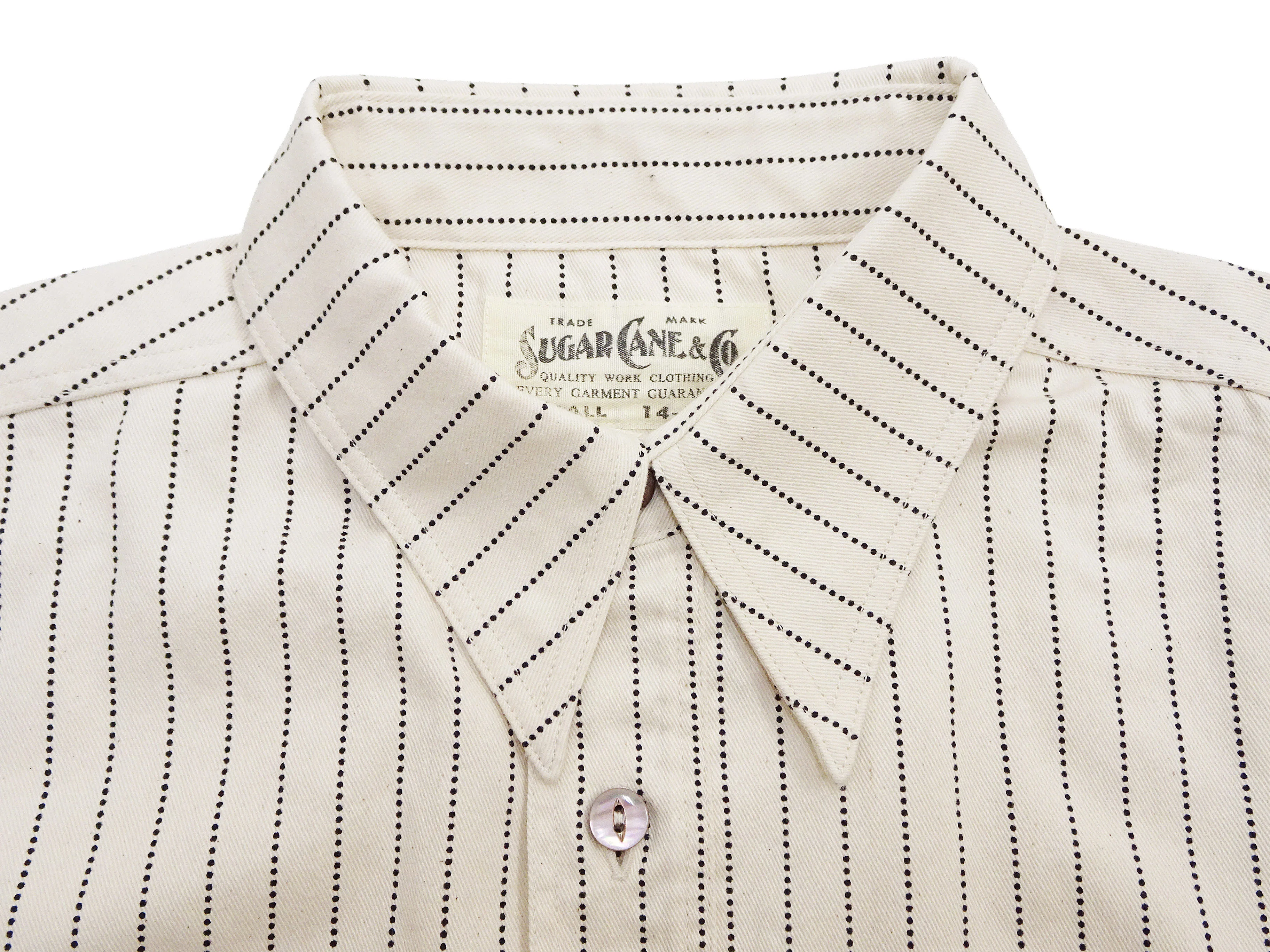
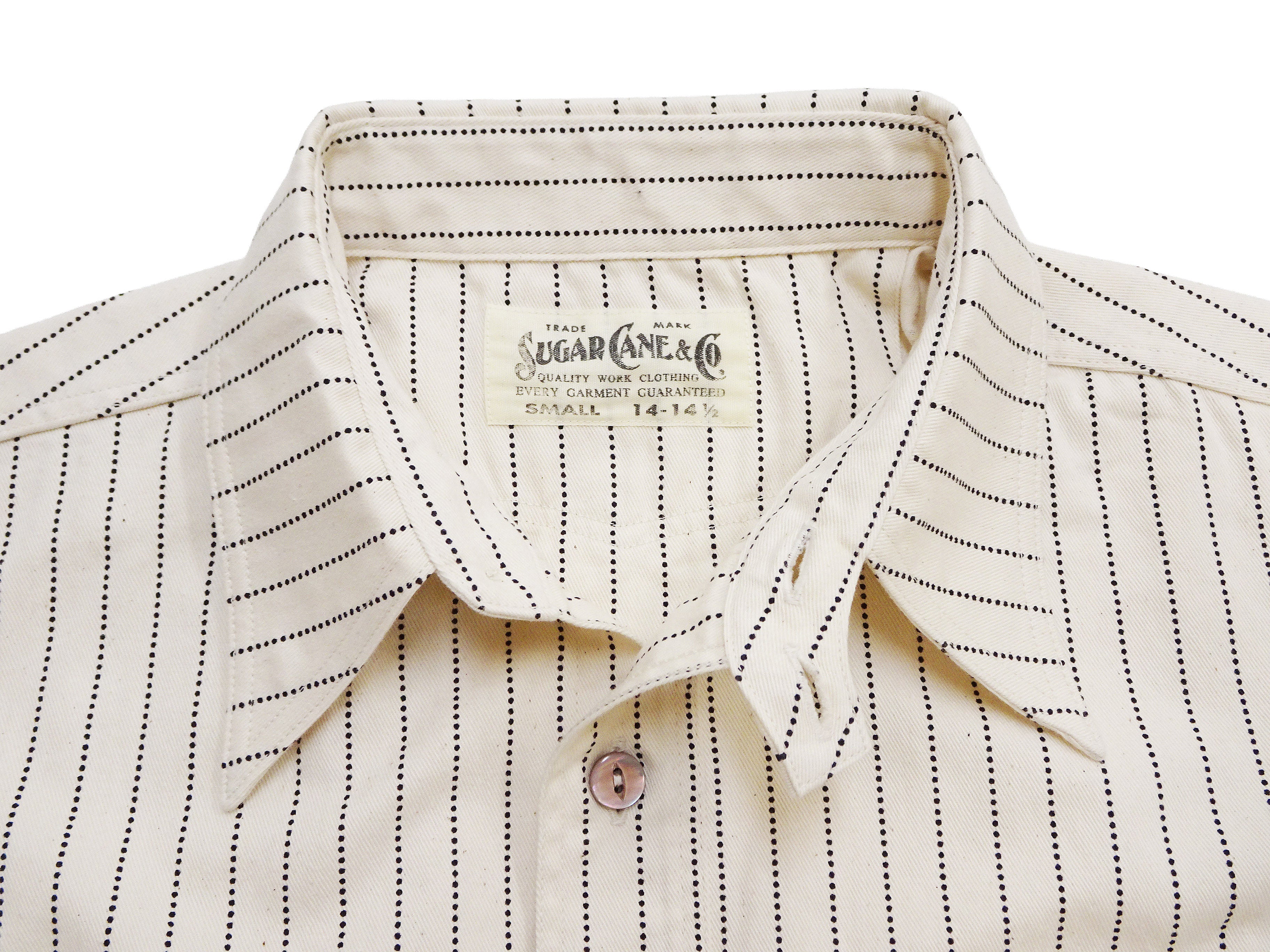
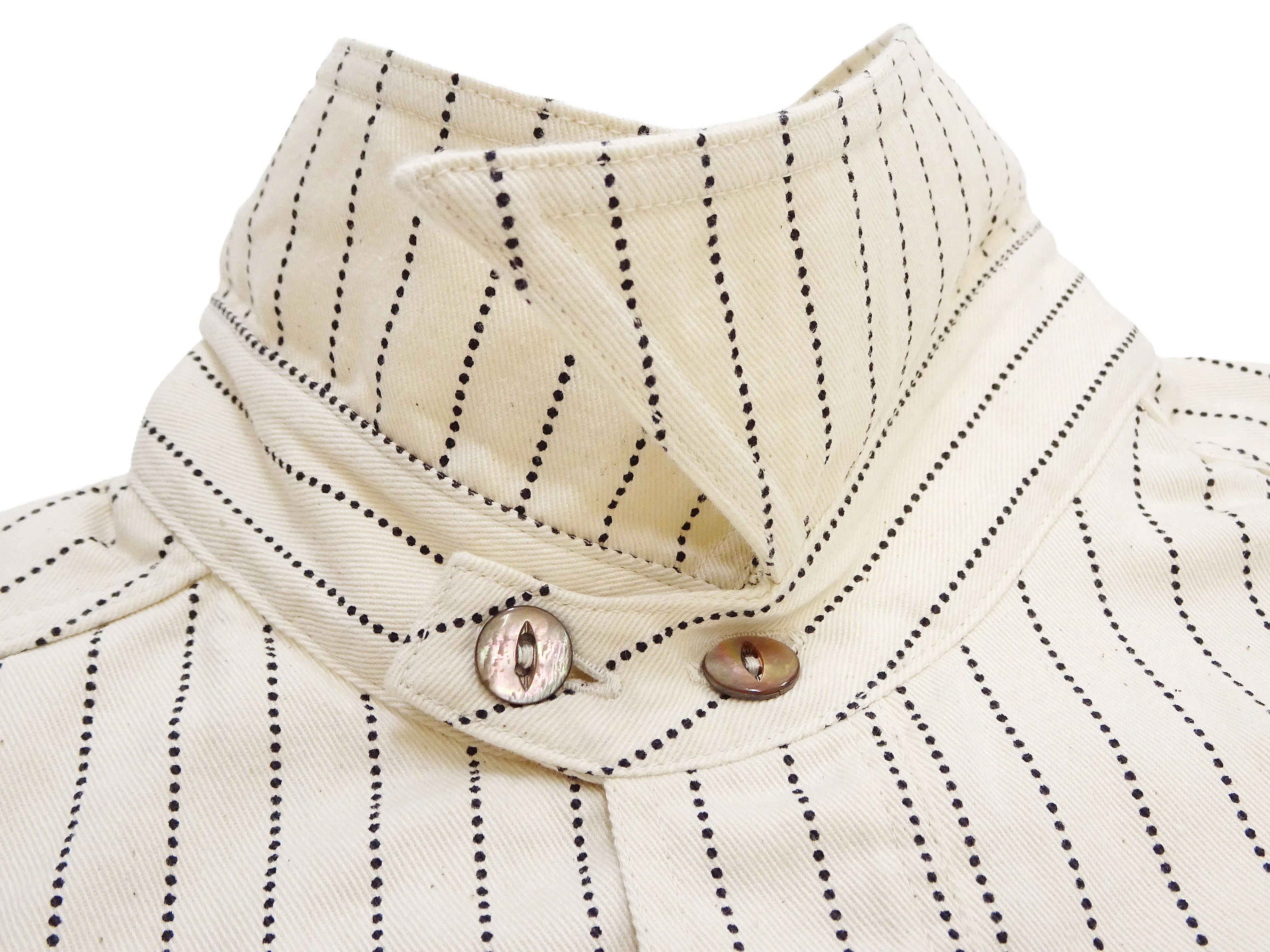
- The shirt features a regular collar with a separate collar stand. The collar stand gives the neckline additional structure and stability, helping the collar maintain its shape whether the top button is worn open or closed. This construction provides a practical work shirt appearance while also giving the collar area a clean and properly shaped look. The stand-supported collar adds dimension around the neck and prevents the collar from collapsing too easily during wear.
Chin Strap / Collar Stand Tab:
- A buttonhole tab extends from the left side of the collar stand. This tab functions as a chin strap-style detail, and a corresponding button is attached to the underside of the folded right collar. When needed, the tab can be fastened to this button to secure the collar area more firmly. This type of construction recalls functional details found on older work shirts, where the upper neckline could be closed more securely for added protection and stability. On this shirt, the tab also adds a subtle but meaningful vintage workwear detail to the collar area.
Front Placket and Button Closure:
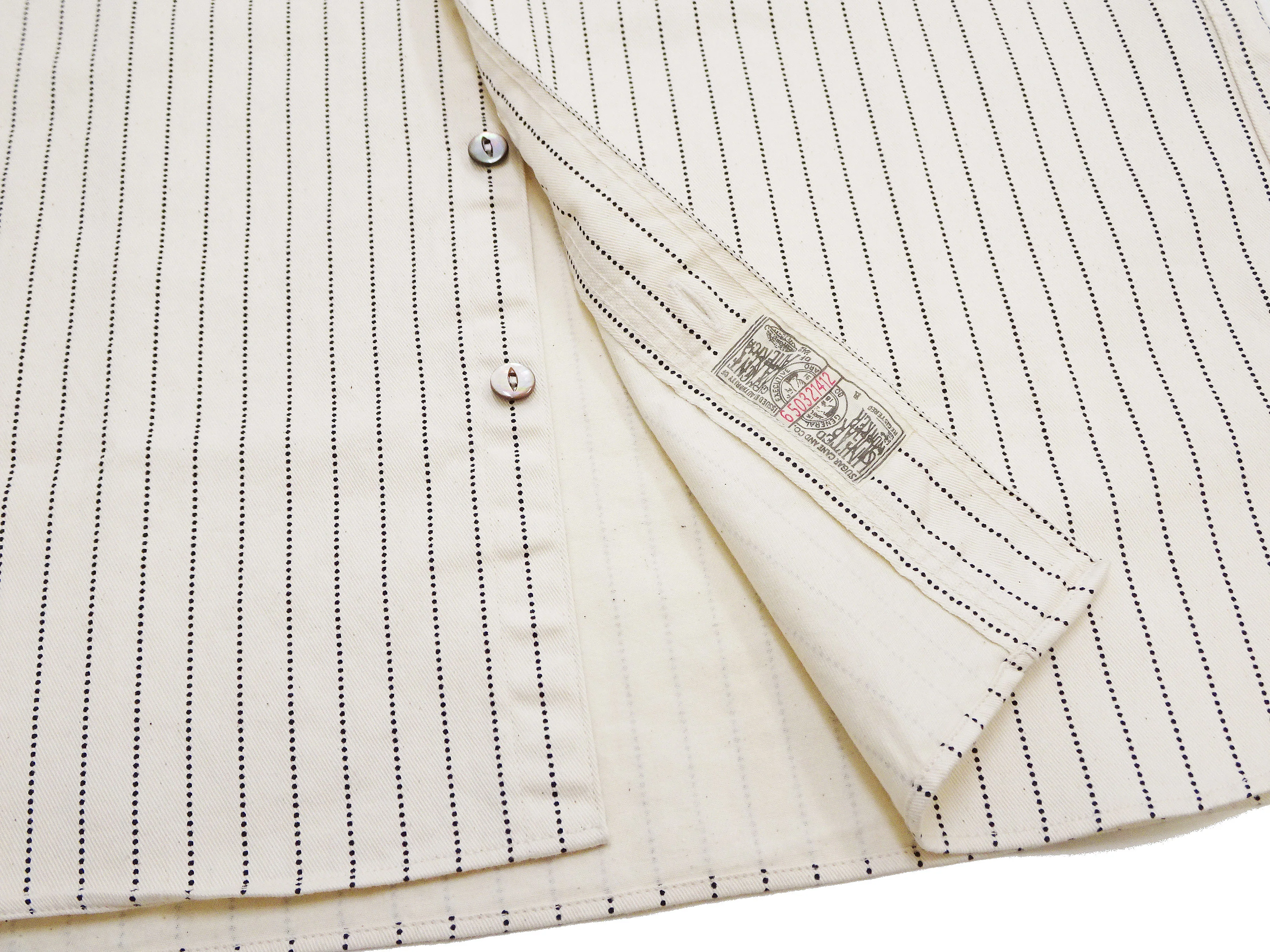
- The front has a full-open button closure for easy wear and removal. The placket is constructed with seven buttons, and the buttonholes are placed vertically. This straightforward front construction reflects classic work shirt design, with a practical layout that is easy to use and visually balanced. The placket also gives the front of the shirt added structure, helping the medium-weight twill fabric sit cleanly along the center front.
Shell Cat's-Eye Buttons:
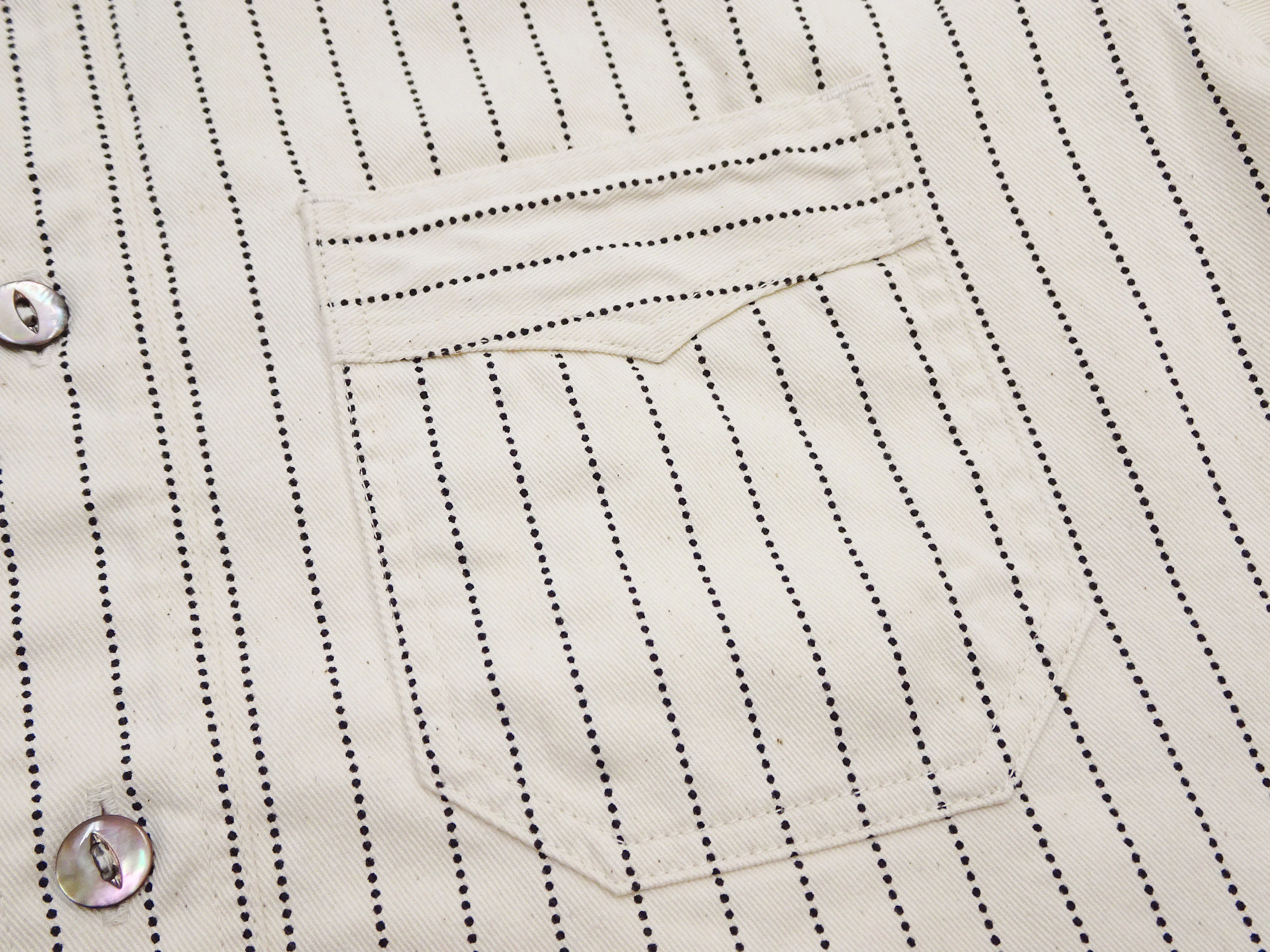
- The front is finished with shell cat's-eye buttons. The shell material shows natural color variation, layered tones, and a subtle luster that provide a refined accent against the ecru wabash stripe fabric. The recessed center shape of the cat's-eye button is a classic detail often associated with vintage work shirts and utility garments. While the buttons are small details, they contribute to the overall period-inspired character of the shirt and complement the natural tone of the fabric.
Chest Pocket Construction:
- The chest is equipped with two open-top patch pockets. Each pocket is sewn onto the surface of the body fabric, creating a practical and straightforward workwear-style construction. The lower corners of the pockets are not simple square corners, but are beveled with straight angled edges, giving the pockets a more considered appearance while maintaining their utilitarian function. The patch pocket construction also adds an extra layer of fabric to the chest, reinforcing the functional work shirt character of the garment.
Pocket Opening Reinforcement:
- At the top of each chest pocket, a separate reinforcement panel is sewn over the pocket opening. This is not a pocket flap. It is a structural reinforcement piece designed to strengthen the pocket mouth, which is an area that receives repeated stress from hand access and stored items. By layering and stitching this reinforcement piece over the opening, the pocket is less likely to stretch, distort, or become weakened over time. This detail reflects the functional thinking behind vintage work shirt construction.
Pointed Pocket Reinforcement Detail:
- The reinforcement panel at the top of each pocket is shaped with a pointed center at the lower edge. This pointed form gives the pocket area a distinctive vintage workwear accent without becoming overly decorative. The reinforcement panels are made from the same ecru wabash stripe fabric as the body, but they are cut and attached so that the stripe pattern runs horizontally. This creates a contrast with the vertical stripes on the body and pocket panels. The result is a subtle visual break at the chest, achieved through fabric orientation rather than added decoration. Bar-tack stitching is also applied at the upper corners of both chest pockets to reinforce these high-stress points and improve durability.
Sleeve Construction:
- The shirt is made with short set-in sleeves. A set-in sleeve is attached into the armhole as a separate sleeve piece, giving the shoulder and upper arm area a clean and familiar shirt structure. The sleeve openings are finished with a folded hem and single-needle stitching, creating a simple and practical finish appropriate for a short-sleeve work shirt. This construction keeps the sleeve area clean and functional without unnecessary bulk.
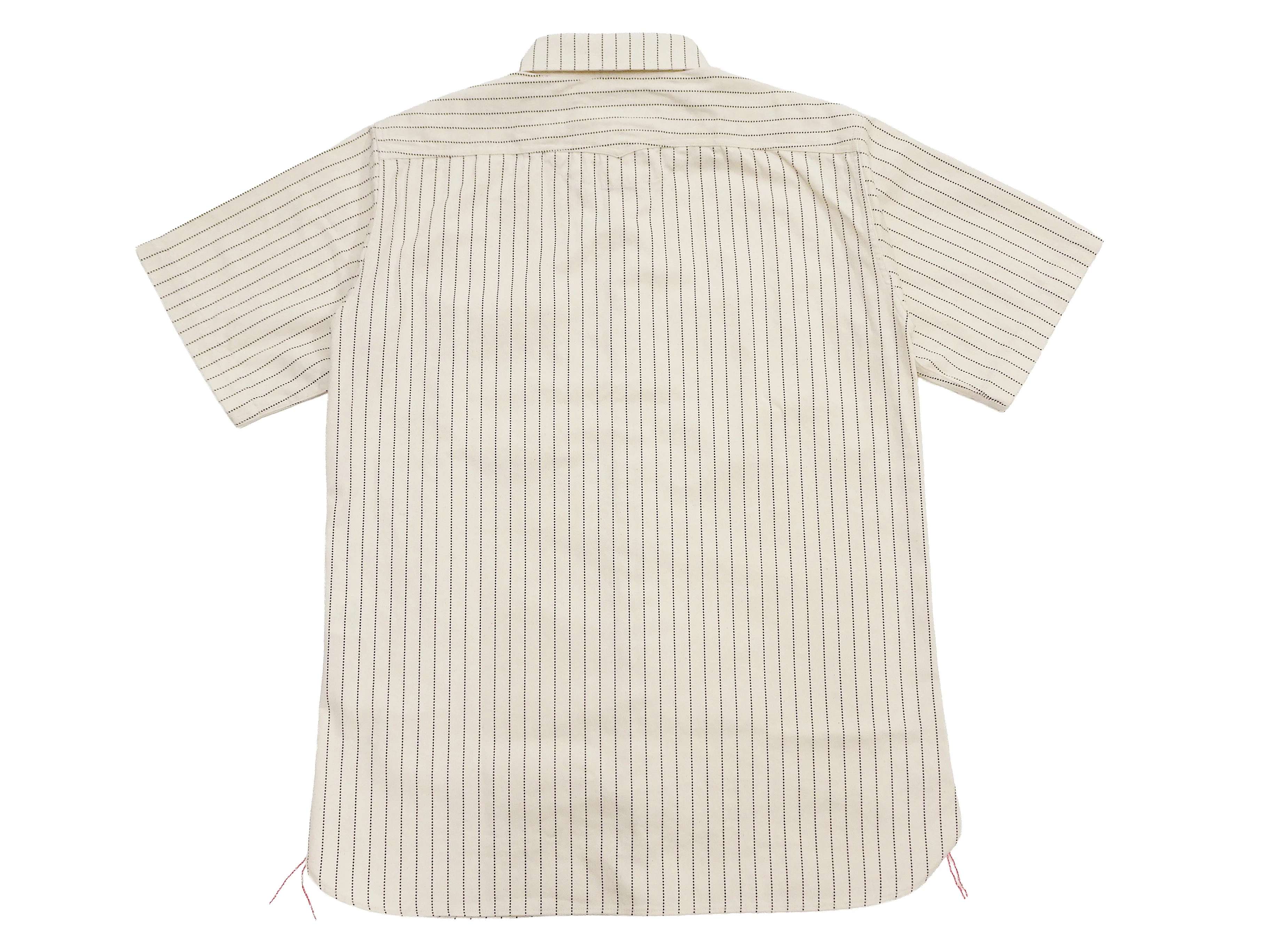
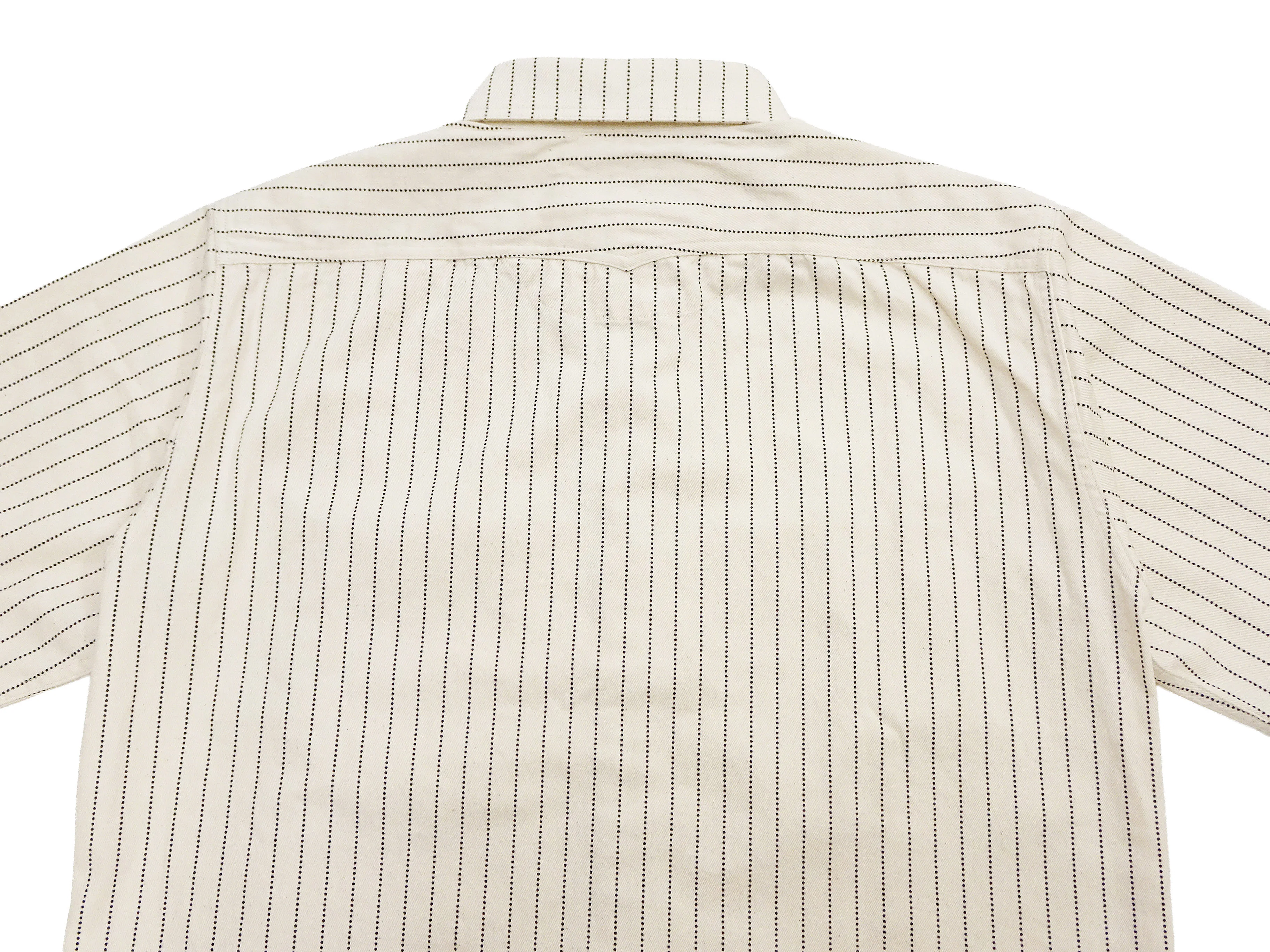
Back Yoke Construction:
- The upper back is constructed with a separate back yoke panel, with an additional layer of fabric applied to the yoke area for added strength and stability. This double-layer yoke construction reinforces the shoulder and upper back area, where stress can occur during movement, while also helping the shirt maintain its shape through repeated wear. The back is made without pleats, creating a clean, straightforward, and controlled rear silhouette. The yoke also adds subtle visual definition to the back of the shirt, while remaining true to the practical construction details commonly associated with traditional work shirts.
Pointed Back Yoke Shape:
- The lower edge of the back yoke is not a simple straight line. Instead, it is shaped with a shallow downward point at the center. This is not the bold, highly decorative yoke shape often associated with Western shirts. Rather, it remains based on a more practical work shirt layout, with only a modest center point added to the yoke line. This shallow pointed shape gives the back a subtle vintage accent while preserving a clean and utilitarian appearance.
Horizontal Stripe Orientation on the Back Yoke:
- The back yoke uses the same ecru wabash stripe fabric as the rest of the shirt, but the fabric is oriented so that the stripes run horizontally across the yoke. In contrast, the stripes on the lower back body run vertically. This change in fabric direction creates a clear visual distinction between the yoke and the main back panel, adding depth and character while using the same material. The detail is subtle, but it shows careful attention to pattern direction and vintage-inspired construction.
Back Body and Silhouette:
- The back is made without pleats, giving the shirt a clean and controlled rear silhouette. Because there are no center or side pleats adding extra volume, the back remains neat while still preserving the practical character of a work shirt. This construction helps avoid excessive fullness across the back and gives the garment a more balanced appearance when worn untucked.
Shirttail Hem:
The hem is finished in a rounded shirttail shape. The front and back hems curve upward toward the side seams, creating a classic shirt profile rather than a straight box hem. This shape provides enough length and coverage for everyday wear, while still allowing the shirt to look natural when worn untucked. The curved hem supports the vintage work shirt character of the garment and gives the lower edge a less rigid appearance.
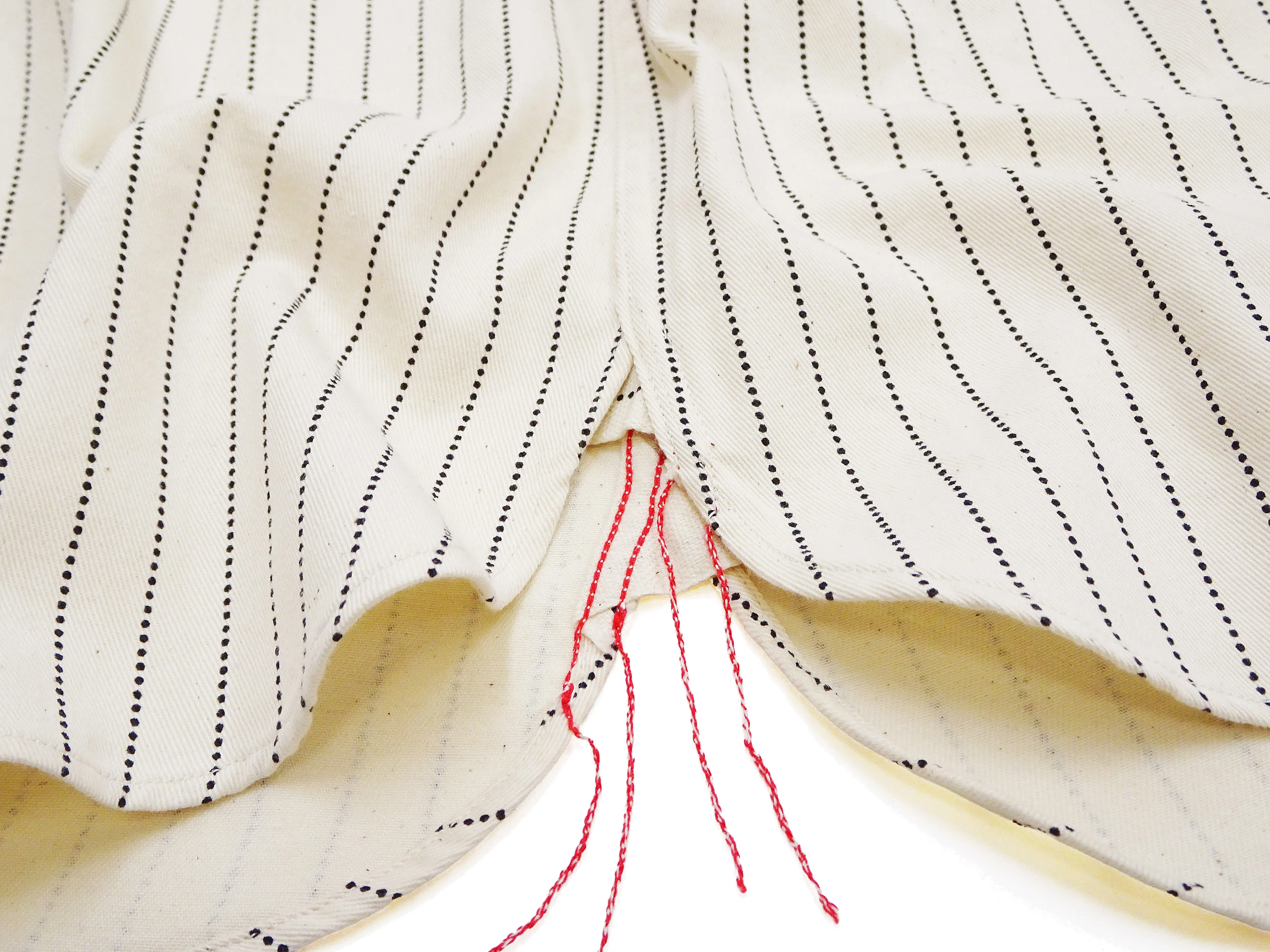
Side Gusset Reinforcement:
- The lower side seams are reinforced with triangular side gussets. The side hem area is a stress point because it can be pulled during movement, sitting, washing, and repeated wear. The gussets help strengthen the point where the side seam stitching and the hem meet, reducing strain at this vulnerable junction and helping prevent seam damage. This reinforcement is placed at the lower edge of the shirt, where the framed seam construction and the rounded hem come together. This detail is commonly seen on vintage work shirts, and it adds both functional reinforcement and period-correct visual character.
Run-Off Threads / Thread Runoffs:
- Two distinctive run-off threads are intentionally left extended from the side seams and hanging down from the side hem. These threads come from the end of the chainstitch sewing process and are a detail often seen on older work shirts. Rather than being cut short at the seam edge, the thread ends are deliberately left long so that they visibly extend beyond the hem and hang from the lower side seam area. On many modern garments, these thread ends are usually trimmed away for a cleaner and more uniform appearance, but leaving them extended in this way is a deliberate reproduction-style detail. This detail does not affect the basic function of the shirt, but it helps recreate the appearance of vintage shirt construction and reflects traditional sewing methods. The extended thread runoffs add a small but meaningful trace of period-correct workwear production and reinforce the garment's authentic vintage-inspired character.
Double-Needle Folded Seam Construction:
Key stress areas such as the side seams, shoulders, and armholes are sewn with double-needle folded seam construction. This method folds the raw fabric edges into the seam and secures them with two parallel rows of stitching. The result is a strong, stable seam that helps control fraying and improves durability. This construction is especially appropriate for work shirts because it supports areas that experience repeated movement and tension during wear. The stitching thread is chosen in a tone that blends with the fabric, allowing the seam construction to remain durable without distracting from the ecru wabash stripe pattern.
Inner Collar Reinforcement:
- The inside of the collar area is reinforced with an additional piece of the same ecru wabash stripe fabric used for the body. This inner reinforcement supports the neck area from the inside and helps stabilize a part of the shirt that receives stress from wear, washing, and repeated handling. The reinforcement piece extends downward in a rounded shape, and the stitching used to attach it appears on the exterior below the back yoke as a semicircular stitch line. From the outside, this creates a subtle arched stitch detail on the upper back, adding structural character without unnecessary ornamentation.
Union Ticket-Style Label:
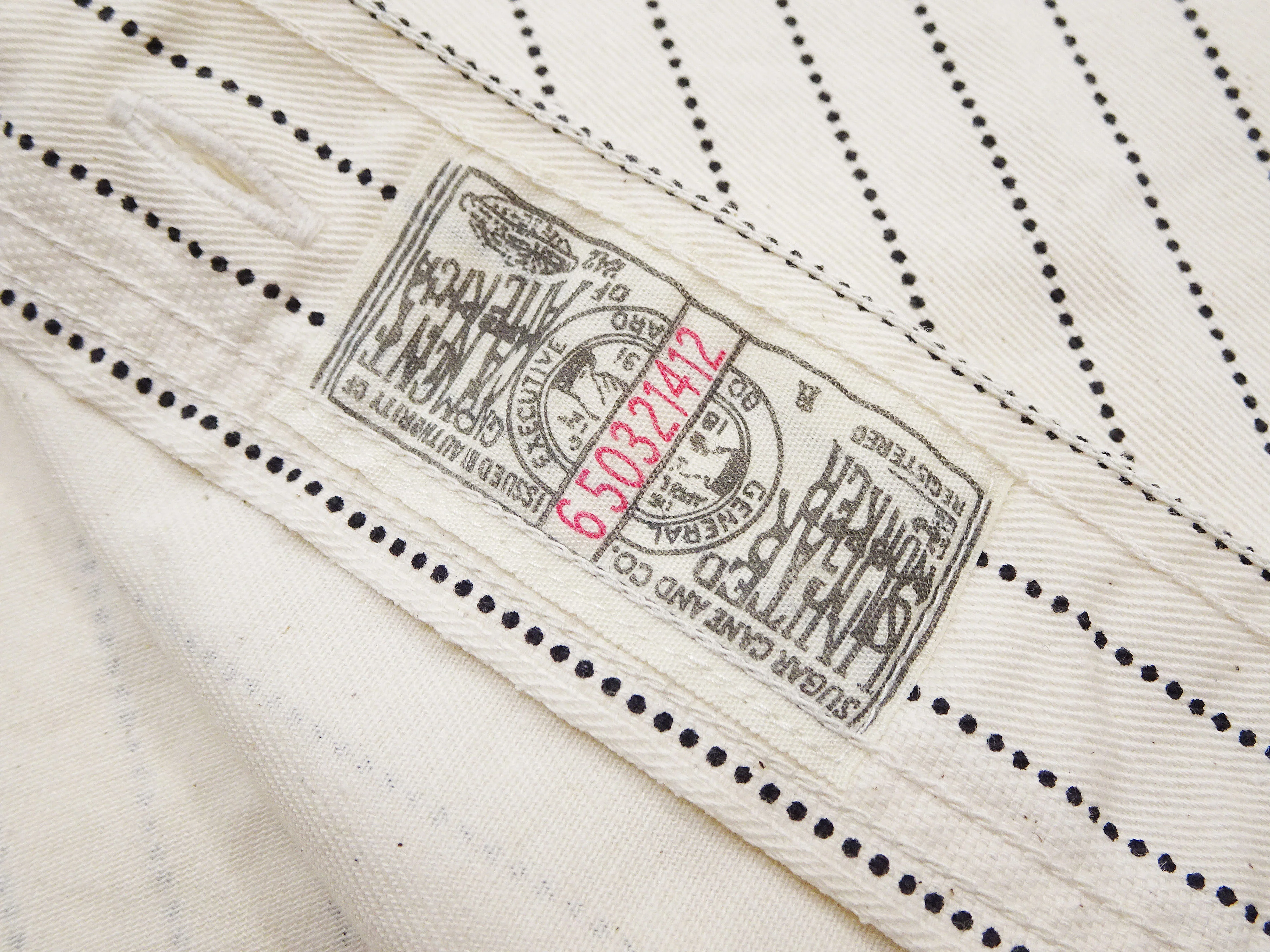
- A union ticket-style label is sewn to the inside lower hem area on the left front body. This type of label is inspired by details found on vintage workwear and work shirts. Historically, union tickets or guarantee-style labels were sometimes associated with labor union manufacturing backgrounds or quality assurance. In modern reproduction clothing, this type of label serves as a period-inspired detail that reinforces the historical context of the garment. On this shirt, it is placed discreetly on the inside, adding authenticity without affecting the clean exterior appearance.
Overall Character:
- With its classic work shirt structure, ecru wabash stripe fabric, shell cat's-eye buttons, reinforced chest pockets, pointed back yoke, side gussets, and intentionally retained run-off threads, this shirt reflects the functional design language of vintage American workwear. At the same time, the lighter ecru base color gives the shirt a more approachable appearance than standard dark indigo wabash, making it easier to coordinate with modern casual outfits. It is a detailed yet wearable piece that combines historical workwear references with practical everyday use.
About Sugar Cane's "FICTION ROMANCE" Collection:
- Sugar Cane's "FICTION ROMANCE" collection is a series of garments that reinterprets the timeless appeal of vintage clothing through the brand's own creative perspective. The collection focuses on practical details, functional construction, and sewing specifications originally found in vintage workwear and everyday garments from the past. By studying historical garments, period references, and archival details, Sugar Cane revives elements that have often been lost in modern clothing production. Rather than simply reproducing one specific vintage garment exactly as it was, the FICTION ROMANCE series combines historically inspired details in Sugar Cane's own unique way. The name reflects this concept: "Fiction" refers to a newly created garment that did not necessarily exist in this exact form, while "Romance" expresses the story, atmosphere, and appeal drawn from vintage clothing history. The result is a collection that blends historical references, functional workwear design, and Sugar Cane's distinctive interpretation of classic American style.
Care Instructions:
- This garment may be machine washed on a gentle cycle at a maximum water temperature of 30°C / 86°F.
- Do not use chlorine bleach or oxygen bleach.
- Do not tumble dry.
- Line dry in the shade.
- Iron at medium temperature using a pressing cloth.
- Professional dry cleaning with petroleum-based solvent is permitted on a gentle process.
- Professional wet cleaning is permitted.
Sugar Cane
Lot No. SC37275 / FICTION ROMANCE 8.5oz. WHITE WABASH STRIPE WORK SHIRT (SHORT SLEEVE) / This men's short-sleeve button-up work shirt is made in Japan by Sugar Cane, Toyo Enterprises' classic American workwear label known for its vintage-inspired craftsmanship. This model is part of Sugar Cane's FICTION ROMANCE series and is based on classic work shirt styling, while featuring a distinctive ecru wabash stripe fabric with a lighter and less common appearance than standard indigo wabash. Traditional wabash stripe fabric often refers to indigo-dyed cloth decorated with rows of small discharge-printed pin dots, creating a striped pattern with a strong vintage workwear character. For this shirt, that traditional wabash character has been reinterpreted through an 8.5 oz. 100% cotton twill fabric in an ecru base color, printed with dot-stripe patterns using indigo dye. The result is a fabric that retains the recognizable character of classic wabash workwear while giving the shirt a more approachable feel. With Sugar Cane's signature detailing throughout, this shirt balances an authentic workwear look with everyday wearability in a style that fits naturally into a contemporary casual wardrobe.
Size and Fit Guide:
Gender: Men.
This item is generally sized closer to standard U.S./EU sizing and is designed with a modern regular fit that is neither too slim nor too loose. Compared with the more relaxed fit often associated with vintage work shirts, this shirt offers a cleaner and more balanced silhouette. The garment has been given a one-wash treatment to help minimize shrinkage and give the fabric a more settled feel from the start. Because fit can vary depending on body type, preferred silhouette, fabric weight, and the design of the garment, please refer to the actual garment measurements listed below and compare them with a similar shirt you already own. All measurements are taken with the garment laid flat and are provided in both centimeters and inches. Please note that slight variations may occur due to manual measurement and natural individual differences between garments.
Our model is wearing a tagged size 36. He is 5'9" (175 cm) tall, weighs 127 lbs (58 kg), and has a chest size of 36 inches (91 cm). He normally wears a US/EU S or 36.
Available Sizes / Approximate Fit Reference:
Tagged Size S (14-14 1/2): As a general guide, fits approximately like a US/EU S, or approximately a US/EU 36 in tops.
Tagged Size M (15-15 1/2): As a general guide, fits approximately like a US/EU M, or approximately a US/EU 38 in tops.
Tagged Size L (16-16 1/2): As a general guide, fits approximately like a US/EU L, or approximately a US/EU 40 in tops.
Tagged Size XL (17-17 1/2): As a general guide, fits approximately like a US/EU XL, or approximately a US/EU 42 in tops.
Tagged Size XXL (18-18 1/2): As a general guide, fits approximately like a US/EU XXL, or approximately a US/EU 44 in tops.
The following measurements show the garment itself, not your own body.
Please compare them with a similar shirt from your wardrobe to get a better sense of fit.
In inches
Tagged Size S (14-14 1/2)__Width: 19.7"__Length: 28.0"__Sleeve: 17.3"(9.1")__Shoulder: 16.5"
Tagged Size M (15-15 1/2)__Width: 20.9"__Length: 28.7"__Sleeve: 17.7"(9.1")__Shoulder: 16.9"
Tagged Size L (16-16 1/2)__Width: 22.0"__Length: 29.9"__Sleeve: 18.1"(9.4")__Shoulder: 17.7"
Tagged Size XL (17-17 1/2)__Width: 23.2"__Length: 30.7"__Sleeve: 18.9"(9.8")__Shoulder: 18.5"
Tagged Size XXL (18-18 1/2)__Width: 24.4"__Length: 31.5"__Sleeve: 20.5"(10.6")__Shoulder: 19.7"
In centimeters
Tagged Size S (14-14 1/2)__Width: 50cm__Length: 71cm__Sleeve: 44cm(23cm)__Shoulder: 42cm
Tagged Size M (15-15 1/2)__Width: 53cm__Length: 73cm__Sleeve: 45cm(23cm)__Shoulder: 43cm
Tagged Size L (16-16 1/2)__Width: 56cm__Length: 76cm__Sleeve: 46cm(24cm)__Shoulder: 45cm
Tagged Size XL (17-17 1/2)__Width: 59cm__Length: 78cm__Sleeve: 48cm(25cm)__Shoulder: 47cm
Tagged Size XXL (18-18 1/2)__Width: 62cm__Length: 80cm__Sleeve: 52cm(27cm)__Shoulder: 50cm
[How We Measure the Actual Garment]
Width (Chest Width / Half Chest): Lay the garment flat and measure straight across from side to side, approximately 3 cm (about 1.2 in.) below the armhole.
Length (Body Length): Measured from the base of the back collar, where the collar meets the body, straight down to the bottom hem.
Sleeve (Sleeve Length from Center Back): The first sleeve measurement is taken from the center back at the base of the collar seam, across the shoulder, and down to the end of the sleeve opening.
Sleeve in parentheses (Sleeve Length from Shoulder Seam): The sleeve length shown in parentheses is measured from the top of the shoulder seam to the end of the sleeve opening.
Shoulder (Shoulder Width): Measured straight across the back from the tip of one shoulder seam to the other.
Made in Japan.
Brand new with tags, in unused condition.
*All measurements are taken by hand with the garment laid flat, using a measuring tape.
*Please note that slight variations in measurements may occur due to individual garment differences and the measuring method.
*Actual color may vary slightly from the photos due to lighting conditions and individual screen settings.
Fabric and Construction Details:
Product Overview:
- This men's short-sleeve button-up work shirt is made in Japan by Sugar Cane, Toyo Enterprises' classic American workwear label known for its vintage-inspired craftsmanship. This model is part of Sugar Cane's FICTION ROMANCE series and is based on traditional American work shirt styling, while featuring a distinctive ecru wabash stripe fabric that offers a lighter and less common interpretation of classic indigo wabash. Traditional wabash stripe fabric often refers to indigo-dyed cloth decorated with rows of small discharge-printed pin dots, forming a striped pattern with a strong vintage workwear character. For this shirt, that traditional wabash character has been reinterpreted through an 8.5 oz. 100% cotton twill fabric in an ecru base color, printed with dot-stripe patterns using indigo dye. The result is a fabric that retains the recognizable character of classic wabash workwear while giving the shirt a more approachable feel. With Sugar Cane's signature attention to detail throughout, this shirt balances an authentic workwear look with everyday wearability in a style that fits naturally into a contemporary casual wardrobe.
Fabric and Material:
- The shirt is made from 8.5 oz. medium-weight 100% cotton twill. The fabric has an ecru base color and shows the diagonal ribs characteristic of twill weave, giving the surface a structured yet natural appearance. The cotton fabric also has a slightly rustic texture, with small natural neps and subtle irregularities that enhance its workwear character. These surface qualities prevent the fabric from looking too flat or overly refined, giving the shirt a casual, utilitarian appearance appropriate for vintage-inspired workwear.
Ecru Wabash Stripe Fabric:
- The dot-stripe pattern is printed over the ecru twill base using indigo dye, creating a vertical striped appearance made from rows of small dots. Unlike standard dark indigo wabash fabric, which usually uses a dark indigo ground with discharge-printed dots, this version reverses the visual balance by placing indigo dot stripes over a natural ecru base. This gives the shirt a lighter overall impression while still retaining the visual identity of traditional wabash workwear. The contrast between the natural cotton ground and the indigo dot pattern creates a distinctive fabric surface that feels vintage-inspired but easier to incorporate into everyday outfits.
Fabric Weight and One-Wash Finish:
- The 8.5 oz. twill has a medium-weight feel that is neither too light nor too heavy. It has enough body to hold its shape and show the structure of the work shirt, while still offering a supple feel suitable for daily wear. The garment has been given a one-wash treatment as part of the finishing process. This helps reduce initial shrinkage and softens the firm hand that is often present in tightly woven twill fabric. As a result, the shirt has a more settled texture from the start, with a natural softness and a more comfortable broken-in feel while still preserving the durability of the twill weave.
Collar Construction:
- The shirt features a regular collar with a separate collar stand. The collar stand gives the neckline additional structure and stability, helping the collar maintain its shape whether the top button is worn open or closed. This construction provides a practical work shirt appearance while also giving the collar area a clean and properly shaped look. The stand-supported collar adds dimension around the neck and prevents the collar from collapsing too easily during wear.
Chin Strap / Collar Stand Tab:
- A buttonhole tab extends from the left side of the collar stand. This tab functions as a chin strap-style detail, and a corresponding button is attached to the underside of the folded right collar. When needed, the tab can be fastened to this button to secure the collar area more firmly. This type of construction recalls functional details found on older work shirts, where the upper neckline could be closed more securely for added protection and stability. On this shirt, the tab also adds a subtle but meaningful vintage workwear detail to the collar area.
Front Placket and Button Closure:
- The front has a full-open button closure for easy wear and removal. The placket is constructed with seven buttons, and the buttonholes are placed vertically. This straightforward front construction reflects classic work shirt design, with a practical layout that is easy to use and visually balanced. The placket also gives the front of the shirt added structure, helping the medium-weight twill fabric sit cleanly along the center front.
Shell Cat's-Eye Buttons:
- The front is finished with shell cat's-eye buttons. The shell material shows natural color variation, layered tones, and a subtle luster that provide a refined accent against the ecru wabash stripe fabric. The recessed center shape of the cat's-eye button is a classic detail often associated with vintage work shirts and utility garments. While the buttons are small details, they contribute to the overall period-inspired character of the shirt and complement the natural tone of the fabric.
Chest Pocket Construction:
- The chest is equipped with two open-top patch pockets. Each pocket is sewn onto the surface of the body fabric, creating a practical and straightforward workwear-style construction. The lower corners of the pockets are not simple square corners, but are beveled with straight angled edges, giving the pockets a more considered appearance while maintaining their utilitarian function. The patch pocket construction also adds an extra layer of fabric to the chest, reinforcing the functional work shirt character of the garment.
Pocket Opening Reinforcement:
- At the top of each chest pocket, a separate reinforcement panel is sewn over the pocket opening. This is not a pocket flap. It is a structural reinforcement piece designed to strengthen the pocket mouth, which is an area that receives repeated stress from hand access and stored items. By layering and stitching this reinforcement piece over the opening, the pocket is less likely to stretch, distort, or become weakened over time. This detail reflects the functional thinking behind vintage work shirt construction.
Pointed Pocket Reinforcement Detail:
- The reinforcement panel at the top of each pocket is shaped with a pointed center at the lower edge. This pointed form gives the pocket area a distinctive vintage workwear accent without becoming overly decorative. The reinforcement panels are made from the same ecru wabash stripe fabric as the body, but they are cut and attached so that the stripe pattern runs horizontally. This creates a contrast with the vertical stripes on the body and pocket panels. The result is a subtle visual break at the chest, achieved through fabric orientation rather than added decoration. Bar-tack stitching is also applied at the upper corners of both chest pockets to reinforce these high-stress points and improve durability.
Sleeve Construction:
- The shirt is made with short set-in sleeves. A set-in sleeve is attached into the armhole as a separate sleeve piece, giving the shoulder and upper arm area a clean and familiar shirt structure. The sleeve openings are finished with a folded hem and single-needle stitching, creating a simple and practical finish appropriate for a short-sleeve work shirt. This construction keeps the sleeve area clean and functional without unnecessary bulk.
Back Yoke Construction:
- The upper back is constructed with a separate back yoke panel, with an additional layer of fabric applied to the yoke area for added strength and stability. This double-layer yoke construction reinforces the shoulder and upper back area, where stress can occur during movement, while also helping the shirt maintain its shape through repeated wear. The back is made without pleats, creating a clean, straightforward, and controlled rear silhouette. The yoke also adds subtle visual definition to the back of the shirt, while remaining true to the practical construction details commonly associated with traditional work shirts.
Pointed Back Yoke Shape:
- The lower edge of the back yoke is not a simple straight line. Instead, it is shaped with a shallow downward point at the center. This is not the bold, highly decorative yoke shape often associated with Western shirts. Rather, it remains based on a more practical work shirt layout, with only a modest center point added to the yoke line. This shallow pointed shape gives the back a subtle vintage accent while preserving a clean and utilitarian appearance.
Horizontal Stripe Orientation on the Back Yoke:
- The back yoke uses the same ecru wabash stripe fabric as the rest of the shirt, but the fabric is oriented so that the stripes run horizontally across the yoke. In contrast, the stripes on the lower back body run vertically. This change in fabric direction creates a clear visual distinction between the yoke and the main back panel, adding depth and character while using the same material. The detail is subtle, but it shows careful attention to pattern direction and vintage-inspired construction.
Back Body and Silhouette:
- The back is made without pleats, giving the shirt a clean and controlled rear silhouette. Because there are no center or side pleats adding extra volume, the back remains neat while still preserving the practical character of a work shirt. This construction helps avoid excessive fullness across the back and gives the garment a more balanced appearance when worn untucked.
Shirttail Hem:
The hem is finished in a rounded shirttail shape. The front and back hems curve upward toward the side seams, creating a classic shirt profile rather than a straight box hem. This shape provides enough length and coverage for everyday wear, while still allowing the shirt to look natural when worn untucked. The curved hem supports the vintage work shirt character of the garment and gives the lower edge a less rigid appearance.
Side Gusset Reinforcement:
- The lower side seams are reinforced with triangular side gussets. The side hem area is a stress point because it can be pulled during movement, sitting, washing, and repeated wear. The gussets help strengthen the point where the side seam stitching and the hem meet, reducing strain at this vulnerable junction and helping prevent seam damage. This reinforcement is placed at the lower edge of the shirt, where the framed seam construction and the rounded hem come together. This detail is commonly seen on vintage work shirts, and it adds both functional reinforcement and period-correct visual character.
Run-Off Threads / Thread Runoffs:
- Two distinctive run-off threads are intentionally left extended from the side seams and hanging down from the side hem. These threads come from the end of the chainstitch sewing process and are a detail often seen on older work shirts. Rather than being cut short at the seam edge, the thread ends are deliberately left long so that they visibly extend beyond the hem and hang from the lower side seam area. On many modern garments, these thread ends are usually trimmed away for a cleaner and more uniform appearance, but leaving them extended in this way is a deliberate reproduction-style detail. This detail does not affect the basic function of the shirt, but it helps recreate the appearance of vintage shirt construction and reflects traditional sewing methods. The extended thread runoffs add a small but meaningful trace of period-correct workwear production and reinforce the garment's authentic vintage-inspired character.
Double-Needle Folded Seam Construction:
Key stress areas such as the side seams, shoulders, and armholes are sewn with double-needle folded seam construction. This method folds the raw fabric edges into the seam and secures them with two parallel rows of stitching. The result is a strong, stable seam that helps control fraying and improves durability. This construction is especially appropriate for work shirts because it supports areas that experience repeated movement and tension during wear. The stitching thread is chosen in a tone that blends with the fabric, allowing the seam construction to remain durable without distracting from the ecru wabash stripe pattern.
Inner Collar Reinforcement:
- The inside of the collar area is reinforced with an additional piece of the same ecru wabash stripe fabric used for the body. This inner reinforcement supports the neck area from the inside and helps stabilize a part of the shirt that receives stress from wear, washing, and repeated handling. The reinforcement piece extends downward in a rounded shape, and the stitching used to attach it appears on the exterior below the back yoke as a semicircular stitch line. From the outside, this creates a subtle arched stitch detail on the upper back, adding structural character without unnecessary ornamentation.
Union Ticket-Style Label:
- A union ticket-style label is sewn to the inside lower hem area on the left front body. This type of label is inspired by details found on vintage workwear and work shirts. Historically, union tickets or guarantee-style labels were sometimes associated with labor union manufacturing backgrounds or quality assurance. In modern reproduction clothing, this type of label serves as a period-inspired detail that reinforces the historical context of the garment. On this shirt, it is placed discreetly on the inside, adding authenticity without affecting the clean exterior appearance.
Overall Character:
- With its classic work shirt structure, ecru wabash stripe fabric, shell cat's-eye buttons, reinforced chest pockets, pointed back yoke, side gussets, and intentionally retained run-off threads, this shirt reflects the functional design language of vintage American workwear. At the same time, the lighter ecru base color gives the shirt a more approachable appearance than standard dark indigo wabash, making it easier to coordinate with modern casual outfits. It is a detailed yet wearable piece that combines historical workwear references with practical everyday use.
About Sugar Cane's "FICTION ROMANCE" Collection:
- Sugar Cane's "FICTION ROMANCE" collection is a series of garments that reinterprets the timeless appeal of vintage clothing through the brand's own creative perspective. The collection focuses on practical details, functional construction, and sewing specifications originally found in vintage workwear and everyday garments from the past. By studying historical garments, period references, and archival details, Sugar Cane revives elements that have often been lost in modern clothing production. Rather than simply reproducing one specific vintage garment exactly as it was, the FICTION ROMANCE series combines historically inspired details in Sugar Cane's own unique way. The name reflects this concept: "Fiction" refers to a newly created garment that did not necessarily exist in this exact form, while "Romance" expresses the story, atmosphere, and appeal drawn from vintage clothing history. The result is a collection that blends historical references, functional workwear design, and Sugar Cane's distinctive interpretation of classic American style.
Care Instructions:
- This garment may be machine washed on a gentle cycle at a maximum water temperature of 30°C / 86°F.
- Do not use chlorine bleach or oxygen bleach.
- Do not tumble dry.
- Line dry in the shade.
- Iron at medium temperature using a pressing cloth.
- Professional dry cleaning with petroleum-based solvent is permitted on a gentle process.
- Professional wet cleaning is permitted.
Select Size
From $0.43
Original: $1.22
-65%Sugar Cane Men's Short Sleeve Ecru Wabash Stripe Work Shirt 8.5 oz Cotton Twill Made in Japan (Fiction Romance SC37275 401A One-Wash)—
$1.22
$0.43Product Information
Product Information
Shipping & Returns
Shipping & Returns
Description
Sugar Cane Men's Short Sleeve Ecru Wabash Stripe Work Shirt 8.5 oz Cotton Twill Made in Japan (Fiction Romance SC37275 401A One-Wash)
Sugar Cane
Lot No. SC37275 / FICTION ROMANCE 8.5oz. WHITE WABASH STRIPE WORK SHIRT (SHORT SLEEVE) / This men's short-sleeve button-up work shirt is made in Japan by Sugar Cane, Toyo Enterprises' classic American workwear label known for its vintage-inspired craftsmanship. This model is part of Sugar Cane's FICTION ROMANCE series and is based on classic work shirt styling, while featuring a distinctive ecru wabash stripe fabric with a lighter and less common appearance than standard indigo wabash. Traditional wabash stripe fabric often refers to indigo-dyed cloth decorated with rows of small discharge-printed pin dots, creating a striped pattern with a strong vintage workwear character. For this shirt, that traditional wabash character has been reinterpreted through an 8.5 oz. 100% cotton twill fabric in an ecru base color, printed with dot-stripe patterns using indigo dye. The result is a fabric that retains the recognizable character of classic wabash workwear while giving the shirt a more approachable feel. With Sugar Cane's signature detailing throughout, this shirt balances an authentic workwear look with everyday wearability in a style that fits naturally into a contemporary casual wardrobe.
Size and Fit Guide:
Gender: Men.
This item is generally sized closer to standard U.S./EU sizing and is designed with a modern regular fit that is neither too slim nor too loose. Compared with the more relaxed fit often associated with vintage work shirts, this shirt offers a cleaner and more balanced silhouette. The garment has been given a one-wash treatment to help minimize shrinkage and give the fabric a more settled feel from the start. Because fit can vary depending on body type, preferred silhouette, fabric weight, and the design of the garment, please refer to the actual garment measurements listed below and compare them with a similar shirt you already own. All measurements are taken with the garment laid flat and are provided in both centimeters and inches. Please note that slight variations may occur due to manual measurement and natural individual differences between garments.
Our model is wearing a tagged size 36. He is 5'9" (175 cm) tall, weighs 127 lbs (58 kg), and has a chest size of 36 inches (91 cm). He normally wears a US/EU S or 36.
Available Sizes / Approximate Fit Reference:
Tagged Size S (14-14 1/2): As a general guide, fits approximately like a US/EU S, or approximately a US/EU 36 in tops.
Tagged Size M (15-15 1/2): As a general guide, fits approximately like a US/EU M, or approximately a US/EU 38 in tops.
Tagged Size L (16-16 1/2): As a general guide, fits approximately like a US/EU L, or approximately a US/EU 40 in tops.
Tagged Size XL (17-17 1/2): As a general guide, fits approximately like a US/EU XL, or approximately a US/EU 42 in tops.
Tagged Size XXL (18-18 1/2): As a general guide, fits approximately like a US/EU XXL, or approximately a US/EU 44 in tops.
The following measurements show the garment itself, not your own body.
Please compare them with a similar shirt from your wardrobe to get a better sense of fit.
In inches
Tagged Size S (14-14 1/2)__Width: 19.7"__Length: 28.0"__Sleeve: 17.3"(9.1")__Shoulder: 16.5"
Tagged Size M (15-15 1/2)__Width: 20.9"__Length: 28.7"__Sleeve: 17.7"(9.1")__Shoulder: 16.9"
Tagged Size L (16-16 1/2)__Width: 22.0"__Length: 29.9"__Sleeve: 18.1"(9.4")__Shoulder: 17.7"
Tagged Size XL (17-17 1/2)__Width: 23.2"__Length: 30.7"__Sleeve: 18.9"(9.8")__Shoulder: 18.5"
Tagged Size XXL (18-18 1/2)__Width: 24.4"__Length: 31.5"__Sleeve: 20.5"(10.6")__Shoulder: 19.7"
In centimeters
Tagged Size S (14-14 1/2)__Width: 50cm__Length: 71cm__Sleeve: 44cm(23cm)__Shoulder: 42cm
Tagged Size M (15-15 1/2)__Width: 53cm__Length: 73cm__Sleeve: 45cm(23cm)__Shoulder: 43cm
Tagged Size L (16-16 1/2)__Width: 56cm__Length: 76cm__Sleeve: 46cm(24cm)__Shoulder: 45cm
Tagged Size XL (17-17 1/2)__Width: 59cm__Length: 78cm__Sleeve: 48cm(25cm)__Shoulder: 47cm
Tagged Size XXL (18-18 1/2)__Width: 62cm__Length: 80cm__Sleeve: 52cm(27cm)__Shoulder: 50cm
[How We Measure the Actual Garment]
Width (Chest Width / Half Chest): Lay the garment flat and measure straight across from side to side, approximately 3 cm (about 1.2 in.) below the armhole.
Length (Body Length): Measured from the base of the back collar, where the collar meets the body, straight down to the bottom hem.
Sleeve (Sleeve Length from Center Back): The first sleeve measurement is taken from the center back at the base of the collar seam, across the shoulder, and down to the end of the sleeve opening.
Sleeve in parentheses (Sleeve Length from Shoulder Seam): The sleeve length shown in parentheses is measured from the top of the shoulder seam to the end of the sleeve opening.
Shoulder (Shoulder Width): Measured straight across the back from the tip of one shoulder seam to the other.
Made in Japan.
Brand new with tags, in unused condition.
*All measurements are taken by hand with the garment laid flat, using a measuring tape.
*Please note that slight variations in measurements may occur due to individual garment differences and the measuring method.
*Actual color may vary slightly from the photos due to lighting conditions and individual screen settings.
Fabric and Construction Details:
Product Overview:
- This men's short-sleeve button-up work shirt is made in Japan by Sugar Cane, Toyo Enterprises' classic American workwear label known for its vintage-inspired craftsmanship. This model is part of Sugar Cane's FICTION ROMANCE series and is based on traditional American work shirt styling, while featuring a distinctive ecru wabash stripe fabric that offers a lighter and less common interpretation of classic indigo wabash. Traditional wabash stripe fabric often refers to indigo-dyed cloth decorated with rows of small discharge-printed pin dots, forming a striped pattern with a strong vintage workwear character. For this shirt, that traditional wabash character has been reinterpreted through an 8.5 oz. 100% cotton twill fabric in an ecru base color, printed with dot-stripe patterns using indigo dye. The result is a fabric that retains the recognizable character of classic wabash workwear while giving the shirt a more approachable feel. With Sugar Cane's signature attention to detail throughout, this shirt balances an authentic workwear look with everyday wearability in a style that fits naturally into a contemporary casual wardrobe.
Fabric and Material:
- The shirt is made from 8.5 oz. medium-weight 100% cotton twill. The fabric has an ecru base color and shows the diagonal ribs characteristic of twill weave, giving the surface a structured yet natural appearance. The cotton fabric also has a slightly rustic texture, with small natural neps and subtle irregularities that enhance its workwear character. These surface qualities prevent the fabric from looking too flat or overly refined, giving the shirt a casual, utilitarian appearance appropriate for vintage-inspired workwear.
Ecru Wabash Stripe Fabric:
- The dot-stripe pattern is printed over the ecru twill base using indigo dye, creating a vertical striped appearance made from rows of small dots. Unlike standard dark indigo wabash fabric, which usually uses a dark indigo ground with discharge-printed dots, this version reverses the visual balance by placing indigo dot stripes over a natural ecru base. This gives the shirt a lighter overall impression while still retaining the visual identity of traditional wabash workwear. The contrast between the natural cotton ground and the indigo dot pattern creates a distinctive fabric surface that feels vintage-inspired but easier to incorporate into everyday outfits.
Fabric Weight and One-Wash Finish:
- The 8.5 oz. twill has a medium-weight feel that is neither too light nor too heavy. It has enough body to hold its shape and show the structure of the work shirt, while still offering a supple feel suitable for daily wear. The garment has been given a one-wash treatment as part of the finishing process. This helps reduce initial shrinkage and softens the firm hand that is often present in tightly woven twill fabric. As a result, the shirt has a more settled texture from the start, with a natural softness and a more comfortable broken-in feel while still preserving the durability of the twill weave.
Collar Construction:
- The shirt features a regular collar with a separate collar stand. The collar stand gives the neckline additional structure and stability, helping the collar maintain its shape whether the top button is worn open or closed. This construction provides a practical work shirt appearance while also giving the collar area a clean and properly shaped look. The stand-supported collar adds dimension around the neck and prevents the collar from collapsing too easily during wear.
Chin Strap / Collar Stand Tab:
- A buttonhole tab extends from the left side of the collar stand. This tab functions as a chin strap-style detail, and a corresponding button is attached to the underside of the folded right collar. When needed, the tab can be fastened to this button to secure the collar area more firmly. This type of construction recalls functional details found on older work shirts, where the upper neckline could be closed more securely for added protection and stability. On this shirt, the tab also adds a subtle but meaningful vintage workwear detail to the collar area.
Front Placket and Button Closure:
- The front has a full-open button closure for easy wear and removal. The placket is constructed with seven buttons, and the buttonholes are placed vertically. This straightforward front construction reflects classic work shirt design, with a practical layout that is easy to use and visually balanced. The placket also gives the front of the shirt added structure, helping the medium-weight twill fabric sit cleanly along the center front.
Shell Cat's-Eye Buttons:
- The front is finished with shell cat's-eye buttons. The shell material shows natural color variation, layered tones, and a subtle luster that provide a refined accent against the ecru wabash stripe fabric. The recessed center shape of the cat's-eye button is a classic detail often associated with vintage work shirts and utility garments. While the buttons are small details, they contribute to the overall period-inspired character of the shirt and complement the natural tone of the fabric.
Chest Pocket Construction:
- The chest is equipped with two open-top patch pockets. Each pocket is sewn onto the surface of the body fabric, creating a practical and straightforward workwear-style construction. The lower corners of the pockets are not simple square corners, but are beveled with straight angled edges, giving the pockets a more considered appearance while maintaining their utilitarian function. The patch pocket construction also adds an extra layer of fabric to the chest, reinforcing the functional work shirt character of the garment.
Pocket Opening Reinforcement:
- At the top of each chest pocket, a separate reinforcement panel is sewn over the pocket opening. This is not a pocket flap. It is a structural reinforcement piece designed to strengthen the pocket mouth, which is an area that receives repeated stress from hand access and stored items. By layering and stitching this reinforcement piece over the opening, the pocket is less likely to stretch, distort, or become weakened over time. This detail reflects the functional thinking behind vintage work shirt construction.
Pointed Pocket Reinforcement Detail:
- The reinforcement panel at the top of each pocket is shaped with a pointed center at the lower edge. This pointed form gives the pocket area a distinctive vintage workwear accent without becoming overly decorative. The reinforcement panels are made from the same ecru wabash stripe fabric as the body, but they are cut and attached so that the stripe pattern runs horizontally. This creates a contrast with the vertical stripes on the body and pocket panels. The result is a subtle visual break at the chest, achieved through fabric orientation rather than added decoration. Bar-tack stitching is also applied at the upper corners of both chest pockets to reinforce these high-stress points and improve durability.
Sleeve Construction:
- The shirt is made with short set-in sleeves. A set-in sleeve is attached into the armhole as a separate sleeve piece, giving the shoulder and upper arm area a clean and familiar shirt structure. The sleeve openings are finished with a folded hem and single-needle stitching, creating a simple and practical finish appropriate for a short-sleeve work shirt. This construction keeps the sleeve area clean and functional without unnecessary bulk.
Back Yoke Construction:
- The upper back is constructed with a separate back yoke panel, with an additional layer of fabric applied to the yoke area for added strength and stability. This double-layer yoke construction reinforces the shoulder and upper back area, where stress can occur during movement, while also helping the shirt maintain its shape through repeated wear. The back is made without pleats, creating a clean, straightforward, and controlled rear silhouette. The yoke also adds subtle visual definition to the back of the shirt, while remaining true to the practical construction details commonly associated with traditional work shirts.
Pointed Back Yoke Shape:
- The lower edge of the back yoke is not a simple straight line. Instead, it is shaped with a shallow downward point at the center. This is not the bold, highly decorative yoke shape often associated with Western shirts. Rather, it remains based on a more practical work shirt layout, with only a modest center point added to the yoke line. This shallow pointed shape gives the back a subtle vintage accent while preserving a clean and utilitarian appearance.
Horizontal Stripe Orientation on the Back Yoke:
- The back yoke uses the same ecru wabash stripe fabric as the rest of the shirt, but the fabric is oriented so that the stripes run horizontally across the yoke. In contrast, the stripes on the lower back body run vertically. This change in fabric direction creates a clear visual distinction between the yoke and the main back panel, adding depth and character while using the same material. The detail is subtle, but it shows careful attention to pattern direction and vintage-inspired construction.
Back Body and Silhouette:
- The back is made without pleats, giving the shirt a clean and controlled rear silhouette. Because there are no center or side pleats adding extra volume, the back remains neat while still preserving the practical character of a work shirt. This construction helps avoid excessive fullness across the back and gives the garment a more balanced appearance when worn untucked.
Shirttail Hem:
The hem is finished in a rounded shirttail shape. The front and back hems curve upward toward the side seams, creating a classic shirt profile rather than a straight box hem. This shape provides enough length and coverage for everyday wear, while still allowing the shirt to look natural when worn untucked. The curved hem supports the vintage work shirt character of the garment and gives the lower edge a less rigid appearance.
Side Gusset Reinforcement:
- The lower side seams are reinforced with triangular side gussets. The side hem area is a stress point because it can be pulled during movement, sitting, washing, and repeated wear. The gussets help strengthen the point where the side seam stitching and the hem meet, reducing strain at this vulnerable junction and helping prevent seam damage. This reinforcement is placed at the lower edge of the shirt, where the framed seam construction and the rounded hem come together. This detail is commonly seen on vintage work shirts, and it adds both functional reinforcement and period-correct visual character.
Run-Off Threads / Thread Runoffs:
- Two distinctive run-off threads are intentionally left extended from the side seams and hanging down from the side hem. These threads come from the end of the chainstitch sewing process and are a detail often seen on older work shirts. Rather than being cut short at the seam edge, the thread ends are deliberately left long so that they visibly extend beyond the hem and hang from the lower side seam area. On many modern garments, these thread ends are usually trimmed away for a cleaner and more uniform appearance, but leaving them extended in this way is a deliberate reproduction-style detail. This detail does not affect the basic function of the shirt, but it helps recreate the appearance of vintage shirt construction and reflects traditional sewing methods. The extended thread runoffs add a small but meaningful trace of period-correct workwear production and reinforce the garment's authentic vintage-inspired character.
Double-Needle Folded Seam Construction:
Key stress areas such as the side seams, shoulders, and armholes are sewn with double-needle folded seam construction. This method folds the raw fabric edges into the seam and secures them with two parallel rows of stitching. The result is a strong, stable seam that helps control fraying and improves durability. This construction is especially appropriate for work shirts because it supports areas that experience repeated movement and tension during wear. The stitching thread is chosen in a tone that blends with the fabric, allowing the seam construction to remain durable without distracting from the ecru wabash stripe pattern.
Inner Collar Reinforcement:
- The inside of the collar area is reinforced with an additional piece of the same ecru wabash stripe fabric used for the body. This inner reinforcement supports the neck area from the inside and helps stabilize a part of the shirt that receives stress from wear, washing, and repeated handling. The reinforcement piece extends downward in a rounded shape, and the stitching used to attach it appears on the exterior below the back yoke as a semicircular stitch line. From the outside, this creates a subtle arched stitch detail on the upper back, adding structural character without unnecessary ornamentation.
Union Ticket-Style Label:
- A union ticket-style label is sewn to the inside lower hem area on the left front body. This type of label is inspired by details found on vintage workwear and work shirts. Historically, union tickets or guarantee-style labels were sometimes associated with labor union manufacturing backgrounds or quality assurance. In modern reproduction clothing, this type of label serves as a period-inspired detail that reinforces the historical context of the garment. On this shirt, it is placed discreetly on the inside, adding authenticity without affecting the clean exterior appearance.
Overall Character:
- With its classic work shirt structure, ecru wabash stripe fabric, shell cat's-eye buttons, reinforced chest pockets, pointed back yoke, side gussets, and intentionally retained run-off threads, this shirt reflects the functional design language of vintage American workwear. At the same time, the lighter ecru base color gives the shirt a more approachable appearance than standard dark indigo wabash, making it easier to coordinate with modern casual outfits. It is a detailed yet wearable piece that combines historical workwear references with practical everyday use.
About Sugar Cane's "FICTION ROMANCE" Collection:
- Sugar Cane's "FICTION ROMANCE" collection is a series of garments that reinterprets the timeless appeal of vintage clothing through the brand's own creative perspective. The collection focuses on practical details, functional construction, and sewing specifications originally found in vintage workwear and everyday garments from the past. By studying historical garments, period references, and archival details, Sugar Cane revives elements that have often been lost in modern clothing production. Rather than simply reproducing one specific vintage garment exactly as it was, the FICTION ROMANCE series combines historically inspired details in Sugar Cane's own unique way. The name reflects this concept: "Fiction" refers to a newly created garment that did not necessarily exist in this exact form, while "Romance" expresses the story, atmosphere, and appeal drawn from vintage clothing history. The result is a collection that blends historical references, functional workwear design, and Sugar Cane's distinctive interpretation of classic American style.
Care Instructions:
- This garment may be machine washed on a gentle cycle at a maximum water temperature of 30°C / 86°F.
- Do not use chlorine bleach or oxygen bleach.
- Do not tumble dry.
- Line dry in the shade.
- Iron at medium temperature using a pressing cloth.
- Professional dry cleaning with petroleum-based solvent is permitted on a gentle process.
- Professional wet cleaning is permitted.
Sugar Cane
Lot No. SC37275 / FICTION ROMANCE 8.5oz. WHITE WABASH STRIPE WORK SHIRT (SHORT SLEEVE) / This men's short-sleeve button-up work shirt is made in Japan by Sugar Cane, Toyo Enterprises' classic American workwear label known for its vintage-inspired craftsmanship. This model is part of Sugar Cane's FICTION ROMANCE series and is based on classic work shirt styling, while featuring a distinctive ecru wabash stripe fabric with a lighter and less common appearance than standard indigo wabash. Traditional wabash stripe fabric often refers to indigo-dyed cloth decorated with rows of small discharge-printed pin dots, creating a striped pattern with a strong vintage workwear character. For this shirt, that traditional wabash character has been reinterpreted through an 8.5 oz. 100% cotton twill fabric in an ecru base color, printed with dot-stripe patterns using indigo dye. The result is a fabric that retains the recognizable character of classic wabash workwear while giving the shirt a more approachable feel. With Sugar Cane's signature detailing throughout, this shirt balances an authentic workwear look with everyday wearability in a style that fits naturally into a contemporary casual wardrobe.
Size and Fit Guide:
Gender: Men.
This item is generally sized closer to standard U.S./EU sizing and is designed with a modern regular fit that is neither too slim nor too loose. Compared with the more relaxed fit often associated with vintage work shirts, this shirt offers a cleaner and more balanced silhouette. The garment has been given a one-wash treatment to help minimize shrinkage and give the fabric a more settled feel from the start. Because fit can vary depending on body type, preferred silhouette, fabric weight, and the design of the garment, please refer to the actual garment measurements listed below and compare them with a similar shirt you already own. All measurements are taken with the garment laid flat and are provided in both centimeters and inches. Please note that slight variations may occur due to manual measurement and natural individual differences between garments.
Our model is wearing a tagged size 36. He is 5'9" (175 cm) tall, weighs 127 lbs (58 kg), and has a chest size of 36 inches (91 cm). He normally wears a US/EU S or 36.
Available Sizes / Approximate Fit Reference:
Tagged Size S (14-14 1/2): As a general guide, fits approximately like a US/EU S, or approximately a US/EU 36 in tops.
Tagged Size M (15-15 1/2): As a general guide, fits approximately like a US/EU M, or approximately a US/EU 38 in tops.
Tagged Size L (16-16 1/2): As a general guide, fits approximately like a US/EU L, or approximately a US/EU 40 in tops.
Tagged Size XL (17-17 1/2): As a general guide, fits approximately like a US/EU XL, or approximately a US/EU 42 in tops.
Tagged Size XXL (18-18 1/2): As a general guide, fits approximately like a US/EU XXL, or approximately a US/EU 44 in tops.
The following measurements show the garment itself, not your own body.
Please compare them with a similar shirt from your wardrobe to get a better sense of fit.
In inches
Tagged Size S (14-14 1/2)__Width: 19.7"__Length: 28.0"__Sleeve: 17.3"(9.1")__Shoulder: 16.5"
Tagged Size M (15-15 1/2)__Width: 20.9"__Length: 28.7"__Sleeve: 17.7"(9.1")__Shoulder: 16.9"
Tagged Size L (16-16 1/2)__Width: 22.0"__Length: 29.9"__Sleeve: 18.1"(9.4")__Shoulder: 17.7"
Tagged Size XL (17-17 1/2)__Width: 23.2"__Length: 30.7"__Sleeve: 18.9"(9.8")__Shoulder: 18.5"
Tagged Size XXL (18-18 1/2)__Width: 24.4"__Length: 31.5"__Sleeve: 20.5"(10.6")__Shoulder: 19.7"
In centimeters
Tagged Size S (14-14 1/2)__Width: 50cm__Length: 71cm__Sleeve: 44cm(23cm)__Shoulder: 42cm
Tagged Size M (15-15 1/2)__Width: 53cm__Length: 73cm__Sleeve: 45cm(23cm)__Shoulder: 43cm
Tagged Size L (16-16 1/2)__Width: 56cm__Length: 76cm__Sleeve: 46cm(24cm)__Shoulder: 45cm
Tagged Size XL (17-17 1/2)__Width: 59cm__Length: 78cm__Sleeve: 48cm(25cm)__Shoulder: 47cm
Tagged Size XXL (18-18 1/2)__Width: 62cm__Length: 80cm__Sleeve: 52cm(27cm)__Shoulder: 50cm
[How We Measure the Actual Garment]
Width (Chest Width / Half Chest): Lay the garment flat and measure straight across from side to side, approximately 3 cm (about 1.2 in.) below the armhole.
Length (Body Length): Measured from the base of the back collar, where the collar meets the body, straight down to the bottom hem.
Sleeve (Sleeve Length from Center Back): The first sleeve measurement is taken from the center back at the base of the collar seam, across the shoulder, and down to the end of the sleeve opening.
Sleeve in parentheses (Sleeve Length from Shoulder Seam): The sleeve length shown in parentheses is measured from the top of the shoulder seam to the end of the sleeve opening.
Shoulder (Shoulder Width): Measured straight across the back from the tip of one shoulder seam to the other.
Made in Japan.
Brand new with tags, in unused condition.
*All measurements are taken by hand with the garment laid flat, using a measuring tape.
*Please note that slight variations in measurements may occur due to individual garment differences and the measuring method.
*Actual color may vary slightly from the photos due to lighting conditions and individual screen settings.
Fabric and Construction Details:
Product Overview:
- This men's short-sleeve button-up work shirt is made in Japan by Sugar Cane, Toyo Enterprises' classic American workwear label known for its vintage-inspired craftsmanship. This model is part of Sugar Cane's FICTION ROMANCE series and is based on traditional American work shirt styling, while featuring a distinctive ecru wabash stripe fabric that offers a lighter and less common interpretation of classic indigo wabash. Traditional wabash stripe fabric often refers to indigo-dyed cloth decorated with rows of small discharge-printed pin dots, forming a striped pattern with a strong vintage workwear character. For this shirt, that traditional wabash character has been reinterpreted through an 8.5 oz. 100% cotton twill fabric in an ecru base color, printed with dot-stripe patterns using indigo dye. The result is a fabric that retains the recognizable character of classic wabash workwear while giving the shirt a more approachable feel. With Sugar Cane's signature attention to detail throughout, this shirt balances an authentic workwear look with everyday wearability in a style that fits naturally into a contemporary casual wardrobe.
Fabric and Material:
- The shirt is made from 8.5 oz. medium-weight 100% cotton twill. The fabric has an ecru base color and shows the diagonal ribs characteristic of twill weave, giving the surface a structured yet natural appearance. The cotton fabric also has a slightly rustic texture, with small natural neps and subtle irregularities that enhance its workwear character. These surface qualities prevent the fabric from looking too flat or overly refined, giving the shirt a casual, utilitarian appearance appropriate for vintage-inspired workwear.
Ecru Wabash Stripe Fabric:
- The dot-stripe pattern is printed over the ecru twill base using indigo dye, creating a vertical striped appearance made from rows of small dots. Unlike standard dark indigo wabash fabric, which usually uses a dark indigo ground with discharge-printed dots, this version reverses the visual balance by placing indigo dot stripes over a natural ecru base. This gives the shirt a lighter overall impression while still retaining the visual identity of traditional wabash workwear. The contrast between the natural cotton ground and the indigo dot pattern creates a distinctive fabric surface that feels vintage-inspired but easier to incorporate into everyday outfits.
Fabric Weight and One-Wash Finish:
- The 8.5 oz. twill has a medium-weight feel that is neither too light nor too heavy. It has enough body to hold its shape and show the structure of the work shirt, while still offering a supple feel suitable for daily wear. The garment has been given a one-wash treatment as part of the finishing process. This helps reduce initial shrinkage and softens the firm hand that is often present in tightly woven twill fabric. As a result, the shirt has a more settled texture from the start, with a natural softness and a more comfortable broken-in feel while still preserving the durability of the twill weave.
Collar Construction:
- The shirt features a regular collar with a separate collar stand. The collar stand gives the neckline additional structure and stability, helping the collar maintain its shape whether the top button is worn open or closed. This construction provides a practical work shirt appearance while also giving the collar area a clean and properly shaped look. The stand-supported collar adds dimension around the neck and prevents the collar from collapsing too easily during wear.
Chin Strap / Collar Stand Tab:
- A buttonhole tab extends from the left side of the collar stand. This tab functions as a chin strap-style detail, and a corresponding button is attached to the underside of the folded right collar. When needed, the tab can be fastened to this button to secure the collar area more firmly. This type of construction recalls functional details found on older work shirts, where the upper neckline could be closed more securely for added protection and stability. On this shirt, the tab also adds a subtle but meaningful vintage workwear detail to the collar area.
Front Placket and Button Closure:
- The front has a full-open button closure for easy wear and removal. The placket is constructed with seven buttons, and the buttonholes are placed vertically. This straightforward front construction reflects classic work shirt design, with a practical layout that is easy to use and visually balanced. The placket also gives the front of the shirt added structure, helping the medium-weight twill fabric sit cleanly along the center front.
Shell Cat's-Eye Buttons:
- The front is finished with shell cat's-eye buttons. The shell material shows natural color variation, layered tones, and a subtle luster that provide a refined accent against the ecru wabash stripe fabric. The recessed center shape of the cat's-eye button is a classic detail often associated with vintage work shirts and utility garments. While the buttons are small details, they contribute to the overall period-inspired character of the shirt and complement the natural tone of the fabric.
Chest Pocket Construction:
- The chest is equipped with two open-top patch pockets. Each pocket is sewn onto the surface of the body fabric, creating a practical and straightforward workwear-style construction. The lower corners of the pockets are not simple square corners, but are beveled with straight angled edges, giving the pockets a more considered appearance while maintaining their utilitarian function. The patch pocket construction also adds an extra layer of fabric to the chest, reinforcing the functional work shirt character of the garment.
Pocket Opening Reinforcement:
- At the top of each chest pocket, a separate reinforcement panel is sewn over the pocket opening. This is not a pocket flap. It is a structural reinforcement piece designed to strengthen the pocket mouth, which is an area that receives repeated stress from hand access and stored items. By layering and stitching this reinforcement piece over the opening, the pocket is less likely to stretch, distort, or become weakened over time. This detail reflects the functional thinking behind vintage work shirt construction.
Pointed Pocket Reinforcement Detail:
- The reinforcement panel at the top of each pocket is shaped with a pointed center at the lower edge. This pointed form gives the pocket area a distinctive vintage workwear accent without becoming overly decorative. The reinforcement panels are made from the same ecru wabash stripe fabric as the body, but they are cut and attached so that the stripe pattern runs horizontally. This creates a contrast with the vertical stripes on the body and pocket panels. The result is a subtle visual break at the chest, achieved through fabric orientation rather than added decoration. Bar-tack stitching is also applied at the upper corners of both chest pockets to reinforce these high-stress points and improve durability.
Sleeve Construction:
- The shirt is made with short set-in sleeves. A set-in sleeve is attached into the armhole as a separate sleeve piece, giving the shoulder and upper arm area a clean and familiar shirt structure. The sleeve openings are finished with a folded hem and single-needle stitching, creating a simple and practical finish appropriate for a short-sleeve work shirt. This construction keeps the sleeve area clean and functional without unnecessary bulk.
Back Yoke Construction:
- The upper back is constructed with a separate back yoke panel, with an additional layer of fabric applied to the yoke area for added strength and stability. This double-layer yoke construction reinforces the shoulder and upper back area, where stress can occur during movement, while also helping the shirt maintain its shape through repeated wear. The back is made without pleats, creating a clean, straightforward, and controlled rear silhouette. The yoke also adds subtle visual definition to the back of the shirt, while remaining true to the practical construction details commonly associated with traditional work shirts.
Pointed Back Yoke Shape:
- The lower edge of the back yoke is not a simple straight line. Instead, it is shaped with a shallow downward point at the center. This is not the bold, highly decorative yoke shape often associated with Western shirts. Rather, it remains based on a more practical work shirt layout, with only a modest center point added to the yoke line. This shallow pointed shape gives the back a subtle vintage accent while preserving a clean and utilitarian appearance.
Horizontal Stripe Orientation on the Back Yoke:
- The back yoke uses the same ecru wabash stripe fabric as the rest of the shirt, but the fabric is oriented so that the stripes run horizontally across the yoke. In contrast, the stripes on the lower back body run vertically. This change in fabric direction creates a clear visual distinction between the yoke and the main back panel, adding depth and character while using the same material. The detail is subtle, but it shows careful attention to pattern direction and vintage-inspired construction.
Back Body and Silhouette:
- The back is made without pleats, giving the shirt a clean and controlled rear silhouette. Because there are no center or side pleats adding extra volume, the back remains neat while still preserving the practical character of a work shirt. This construction helps avoid excessive fullness across the back and gives the garment a more balanced appearance when worn untucked.
Shirttail Hem:
The hem is finished in a rounded shirttail shape. The front and back hems curve upward toward the side seams, creating a classic shirt profile rather than a straight box hem. This shape provides enough length and coverage for everyday wear, while still allowing the shirt to look natural when worn untucked. The curved hem supports the vintage work shirt character of the garment and gives the lower edge a less rigid appearance.
Side Gusset Reinforcement:
- The lower side seams are reinforced with triangular side gussets. The side hem area is a stress point because it can be pulled during movement, sitting, washing, and repeated wear. The gussets help strengthen the point where the side seam stitching and the hem meet, reducing strain at this vulnerable junction and helping prevent seam damage. This reinforcement is placed at the lower edge of the shirt, where the framed seam construction and the rounded hem come together. This detail is commonly seen on vintage work shirts, and it adds both functional reinforcement and period-correct visual character.
Run-Off Threads / Thread Runoffs:
- Two distinctive run-off threads are intentionally left extended from the side seams and hanging down from the side hem. These threads come from the end of the chainstitch sewing process and are a detail often seen on older work shirts. Rather than being cut short at the seam edge, the thread ends are deliberately left long so that they visibly extend beyond the hem and hang from the lower side seam area. On many modern garments, these thread ends are usually trimmed away for a cleaner and more uniform appearance, but leaving them extended in this way is a deliberate reproduction-style detail. This detail does not affect the basic function of the shirt, but it helps recreate the appearance of vintage shirt construction and reflects traditional sewing methods. The extended thread runoffs add a small but meaningful trace of period-correct workwear production and reinforce the garment's authentic vintage-inspired character.
Double-Needle Folded Seam Construction:
Key stress areas such as the side seams, shoulders, and armholes are sewn with double-needle folded seam construction. This method folds the raw fabric edges into the seam and secures them with two parallel rows of stitching. The result is a strong, stable seam that helps control fraying and improves durability. This construction is especially appropriate for work shirts because it supports areas that experience repeated movement and tension during wear. The stitching thread is chosen in a tone that blends with the fabric, allowing the seam construction to remain durable without distracting from the ecru wabash stripe pattern.
Inner Collar Reinforcement:
- The inside of the collar area is reinforced with an additional piece of the same ecru wabash stripe fabric used for the body. This inner reinforcement supports the neck area from the inside and helps stabilize a part of the shirt that receives stress from wear, washing, and repeated handling. The reinforcement piece extends downward in a rounded shape, and the stitching used to attach it appears on the exterior below the back yoke as a semicircular stitch line. From the outside, this creates a subtle arched stitch detail on the upper back, adding structural character without unnecessary ornamentation.
Union Ticket-Style Label:
- A union ticket-style label is sewn to the inside lower hem area on the left front body. This type of label is inspired by details found on vintage workwear and work shirts. Historically, union tickets or guarantee-style labels were sometimes associated with labor union manufacturing backgrounds or quality assurance. In modern reproduction clothing, this type of label serves as a period-inspired detail that reinforces the historical context of the garment. On this shirt, it is placed discreetly on the inside, adding authenticity without affecting the clean exterior appearance.
Overall Character:
- With its classic work shirt structure, ecru wabash stripe fabric, shell cat's-eye buttons, reinforced chest pockets, pointed back yoke, side gussets, and intentionally retained run-off threads, this shirt reflects the functional design language of vintage American workwear. At the same time, the lighter ecru base color gives the shirt a more approachable appearance than standard dark indigo wabash, making it easier to coordinate with modern casual outfits. It is a detailed yet wearable piece that combines historical workwear references with practical everyday use.
About Sugar Cane's "FICTION ROMANCE" Collection:
- Sugar Cane's "FICTION ROMANCE" collection is a series of garments that reinterprets the timeless appeal of vintage clothing through the brand's own creative perspective. The collection focuses on practical details, functional construction, and sewing specifications originally found in vintage workwear and everyday garments from the past. By studying historical garments, period references, and archival details, Sugar Cane revives elements that have often been lost in modern clothing production. Rather than simply reproducing one specific vintage garment exactly as it was, the FICTION ROMANCE series combines historically inspired details in Sugar Cane's own unique way. The name reflects this concept: "Fiction" refers to a newly created garment that did not necessarily exist in this exact form, while "Romance" expresses the story, atmosphere, and appeal drawn from vintage clothing history. The result is a collection that blends historical references, functional workwear design, and Sugar Cane's distinctive interpretation of classic American style.
Care Instructions:
- This garment may be machine washed on a gentle cycle at a maximum water temperature of 30°C / 86°F.
- Do not use chlorine bleach or oxygen bleach.
- Do not tumble dry.
- Line dry in the shade.
- Iron at medium temperature using a pressing cloth.
- Professional dry cleaning with petroleum-based solvent is permitted on a gentle process.
- Professional wet cleaning is permitted.